
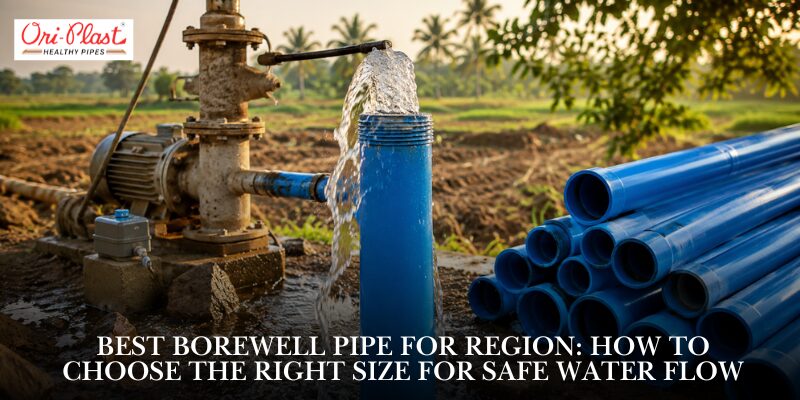
Priya says, “I need a borewell for my home, but I don’t know which pipe size will actually work for my area.” Rima replies, “That is exactly where many people get stuck. The best borewell pipe for the region is not one fixed size for everyone—it depends on soil, water depth, use, and pressure needs.”
When people plan a borewell, the real pain starts after drilling. They worry about low water flow, pipe damage, rising maintenance costs, and whether they chose the wrong size for their area. A small mistake in pipe selection can affect pumping efficiency for years, so the decision needs more than guesswork.
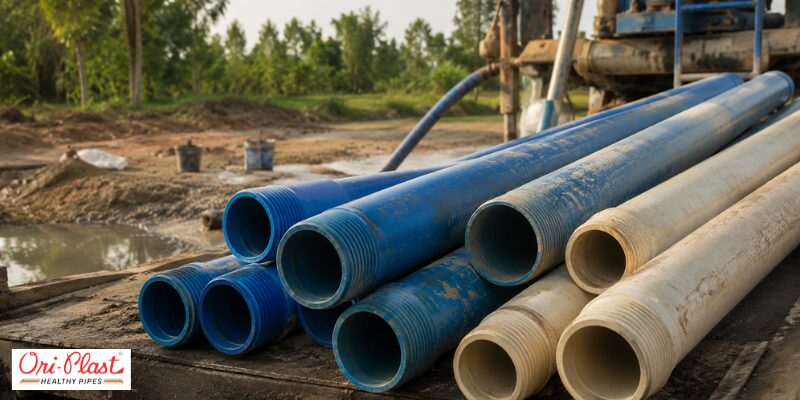 Image Source : AI Generated
 The problem most buyers face
Priya says, “The dealer gave me one size, but another contractor suggested something else. Now I’m confused.” Rima replies, “That confusion is normal, because borewell selection is not only about price. It is about matching the best borewell pipe for the region with your water source, depth, and end use.”
Many buyers search for borewell pipe diameter for home use, borewell pipe diameter for agriculture, and borewell pipe diameter in India because the requirements change from one property to another. A pipe that works for a home in a groundwater-rich zone may not suit a farm that needs heavy seasonal pumping. In India, borewell installations vary widely because soil, aquifer depth, and rainfall patterns are different from one place to another.
How region affects pipe choice
Priya says, “So what changes from region to region?” Rima replies, “Three things matter most: soil condition, water table depth, and how much water you need every day.”
In sandy zones, the pipe choice often focuses on stability and smooth water movement. In rocky areas, durability and pressure resistance matter more. In regions with harder water, users often look for a stronger material that can handle long-term wear better. That is why people often search for how to choose borewell pipe diameter before making a purchase.
The best borewell pipe for the region is the one that can handle local ground conditions without restricting water flow. For example, a farm setup in Punjab may need a different approach from a household setup in Kolkata, while a drilling project in Odisha or Guwahati may face different soil layers and water depth patterns.
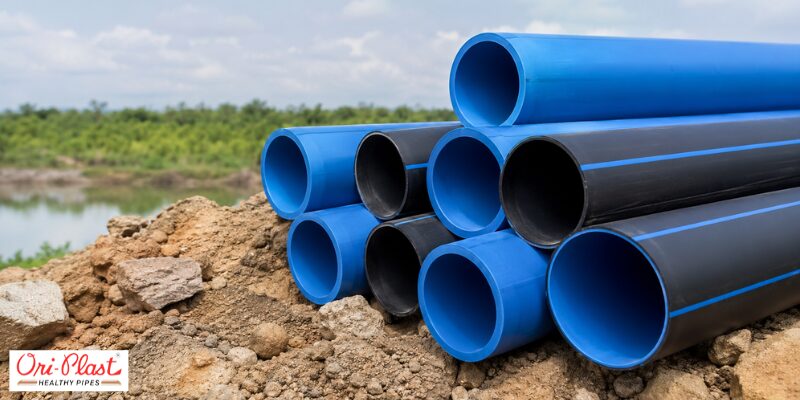 Image Source : AI Generated
 Borewell use decides the size
Priya says, “Does home use need the same pipe as agriculture?” Rima replies, “Not at all. A home setup is usually smaller and more controlled, while farming systems often need larger flow and longer operating hours.”
That is why borewell pipe diameter for home use and borewell pipe diameter for agriculture are two separate decision points. For domestic water supply, the focus is often on steady pressure and simple installation. For irrigation, buyers look more at water delivery capacity, durability, and compatibility with pumps and fittings.
If the pipe is too small, it can restrict flow and reduce performance. If it is too large without need, it may increase cost without adding real value. The best borewell pipe for the region balances performance and economy.
Material matters more than many people think
Priya says, “Should I choose PVC or HDPE?” Rima replies, “That depends on how your borewell is being used and where it is being installed.”
People often compare PVC borewell pipe diameter and HDPE borewell pipe diameter because both materials are common in water applications. PVC is often chosen for its affordability and ease of handling, while HDPE is preferred in many situations for flexibility and impact resistance. A good borewell pipe material selection guide should always include the drilling depth, water pressure, and ground conditions.
The market for water infrastructure continues to grow as more households and farms invest in dependable supply systems, and that makes correct pipe selection even more important. If the pipe fails early, replacement costs and downtime can become much higher than the initial savings.
Choosing the right diameter
Priya says, “How do I decide the diameter without making a mistake?” Rima replies, “Start with usage, then check depth, then confirm the material, and finally match it with the pump.” The best borewell pipe for region is usually selected after asking a few practical questions:- How deep is the borewell?
- Is it for home use or agriculture?
- Is the area known for hard water?
- What pump capacity will be used?
- Will the pipe handle local pressure conditions?
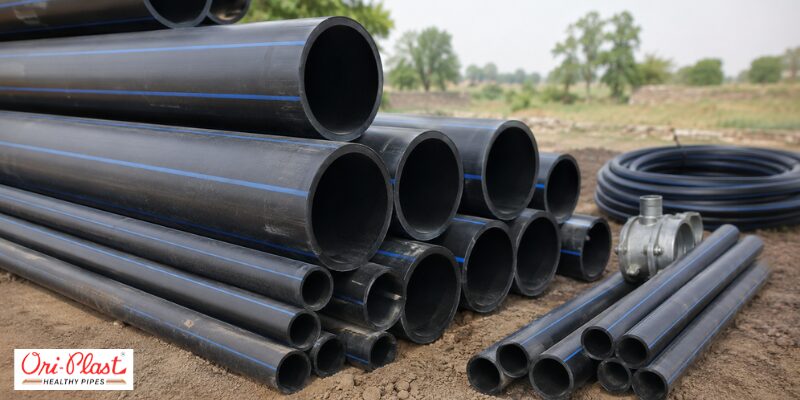 Image Source : AI Generated
 Common mistakes buyers make
Priya says, “What do people usually do wrong?” Rima replies, “They often choose based only on price or only on what someone else used in a different region.”
That is one of the biggest problems in borewell planning. A common mistake in choosing borewell pipe size is ignoring local soil and water conditions. Another mistake is selecting a pipe that does not match the pump or fittings. Some buyers also forget that borewell pipe diameter for hard water areas may need extra attention to long-term performance and maintenance.
When these mistakes happen, the user may face low discharge, frequent repairs, or poor pumping efficiency. That is why the best borewell pipe for the region should be chosen with both technical and practical factors in mind.
Where buyers usually search
Priya says, “People keep asking where to buy from.” Rima replies, “That is because trust matters as much as the product.”
Many customers look to order borewell pipes in India and borewell pipe manufacturers in India because they want reliable supply, proper quality assurance, and support after purchase. In a project-based product like this, buyers often want confidence that the pipes will meet the application requirement and arrive on time. For irrigation buyers, borewell pipe for irrigation and borewell pipe for agriculture are often the strongest purchase-driven searches.
The right supplier should help with sizing, application guidance, and product suitability, not just sell a pipe. That is especially important when the project is tied to household water needs or farm productivity.
A simple conversation for selection
Priya says, “If I had to decide today, what should I remember?” Rima replies, “Remember this: the best borewell pipe for the region is the one that suits your land, your water needs, and your pump.”
A simple way to think about it is:
- For home use, focus on stable flow and ease of installation.
- For agriculture, focus on durability and higher water demand.
- For hard water areas, focus on long-term performance.
- For different Indian regions, always check local ground conditions first.
If the borewell is being set up in a place like Assam or Raipur, the final choice may differ from a similar setup in Jaipur or Odisha because local geology and water availability are not identical. That is why regional selection is so useful—it prevents expensive trial and error.
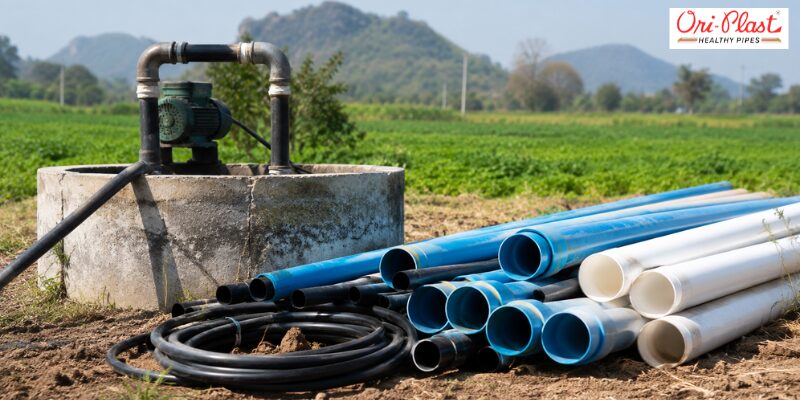 Image Source : AI Generated
 Final buying logic
Priya says, “So the answer is not just pipe size?” Rima replies, “Exactly. The answer is the right combination of diameter, material, and regional suitability.”
When you compare options like PVC borewell pipe diameter and HDPE borewell pipe diameter, always ask which one fits the region and the use case best. If you are planning a home borewell, the priority may be compact performance. If it is an agricultural borewell, strength and flow consistency become more important. The best borewell pipe for the region is the one that keeps water moving efficiently with fewer future problems.