Water is too precious to waste, yet many farmers still lose a big share of it through uneven watering, leakage, and outdated field methods. Simaa looked at the dry soil and said, “Every season feels harder. We spend more on water, but the crops still don’t get enough.” Pritam replied, “That’s exactly why a drip irrigation system for agriculture can change the game for small and medium farms.”
A well-planned drip irrigation system for agriculture delivers water directly to the plant root zone, reduces waste, and helps farmers manage costs more efficiently. For farms in places like Assam, Odisha, Punjab, Raipur, Guwahati, Kolkata, or Jaipur, this kind of irrigation is becoming a practical solution for better crop health and smarter water use.
[caption id="attachment_43496" align="alignright" width="800"]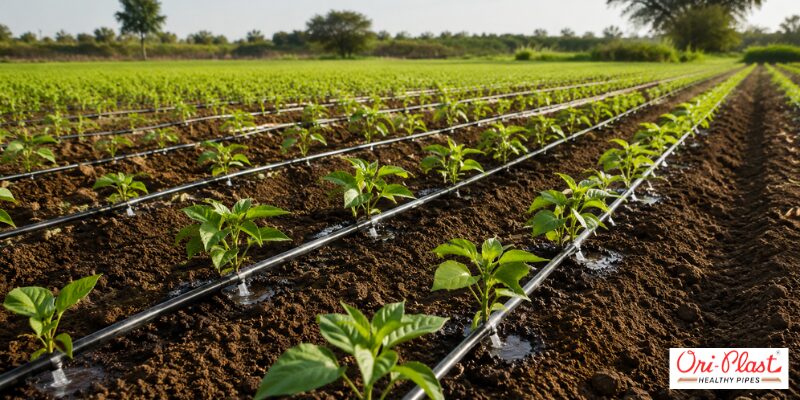 Image Source : AI Generated[/caption]
 Why farmers are switching to drip irrigation
Simaa said, “I always thought irrigation had to mean running water across the whole field.” Pritam smiled and replied, “That’s the old way. A drip irrigation system for agriculture gives water slowly and directly where it matters most.”
Farmers are choosing this method because it supports better water control, healthier crops, and lower wastage. According to global agricultural studies, drip irrigation can reduce water use significantly compared with flood irrigation, and that matters even more in areas facing irregular rainfall or rising input costs.
A drip irrigation system for agriculture also helps when labor is limited. Instead of manually watering large areas, farmers can create a planned network that works consistently across the field. That means less guesswork and more predictable results.
How drip irrigation works in agriculture
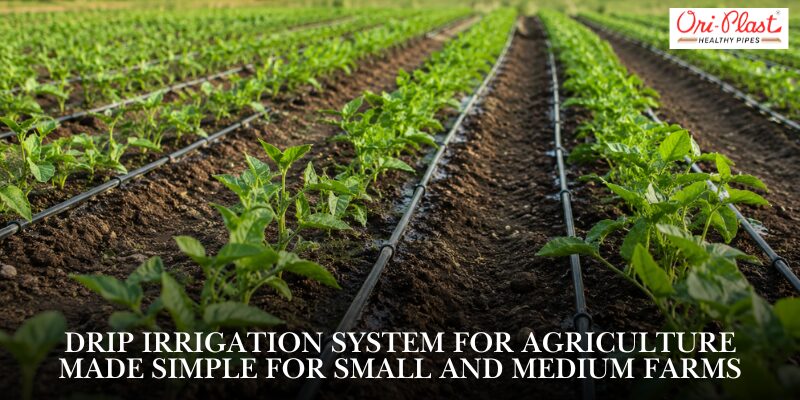
Simaa asked, “How does the water even travel through all those pipes?” Pritam replied, “It’s simple. The main line carries water, the laterals distribute it, and the emitters release it slowly near each plant.”
That is the core idea behind a drip irrigation system for agriculture. Water moves through carefully selected pipes and fittings, then reaches each crop in controlled drops or a low flow. This method is especially useful for vegetable farms, orchards, and row crops where precision matters.
When the system is designed properly, farmers can avoid overwatering one area and underwatering another. That balance is one reason drip irrigation system for agriculture is now preferred in many modern farming operations.
[caption id="attachment_43495" align="aligncenter" width="800"]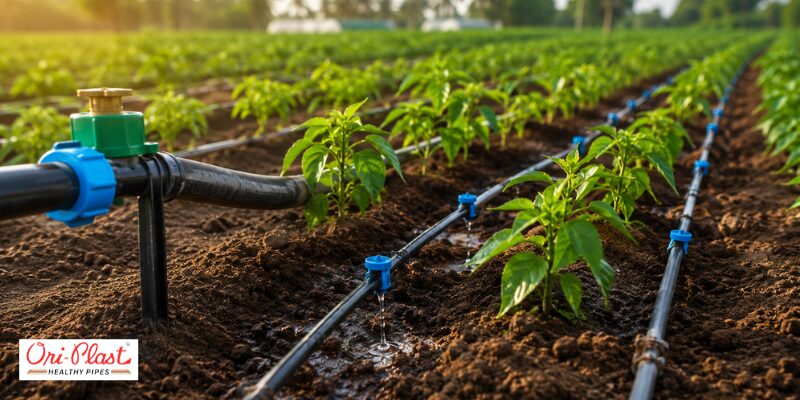 Image Source : AI Generated[/caption]
 Choosing the right pipes and fittings
Simaa said, “So what should I buy first?” Pritam answered, “Start with the right pipe material and fittings. That decides how long your system lasts.”
For a durable drip irrigation system for agriculture, pipe selection is critical. Many farmers compare options such as HDPE pipes for drip irrigation and PE pipes for irrigation use because both are known for flexibility, strength, and suitability for field layouts. If the goal is long-term performance, the best pipe material for drip irrigation should resist pressure changes, field wear, and leakage.
You will also need drip irrigation fittings for farms that create tight, reliable connections. Poor-quality fittings can lead to leakage and pressure loss, which lowers the system’s efficiency. That is why farmers often search for leak proof irrigation pipe fittings before making a purchase.
For larger setups, many buyers also look for agricultural drip irrigation pipes India and trusted irrigation pipe manufacturers in India that offer consistent product quality and support. A good drip irrigation system for agriculture is not just about pipes — it is about the entire network working together.
How to set up drip irrigation for small farms
Simaa said, “I have a small farm. Will this still work for me?” Pritam replied, “Yes, and that’s actually where it shines most.”
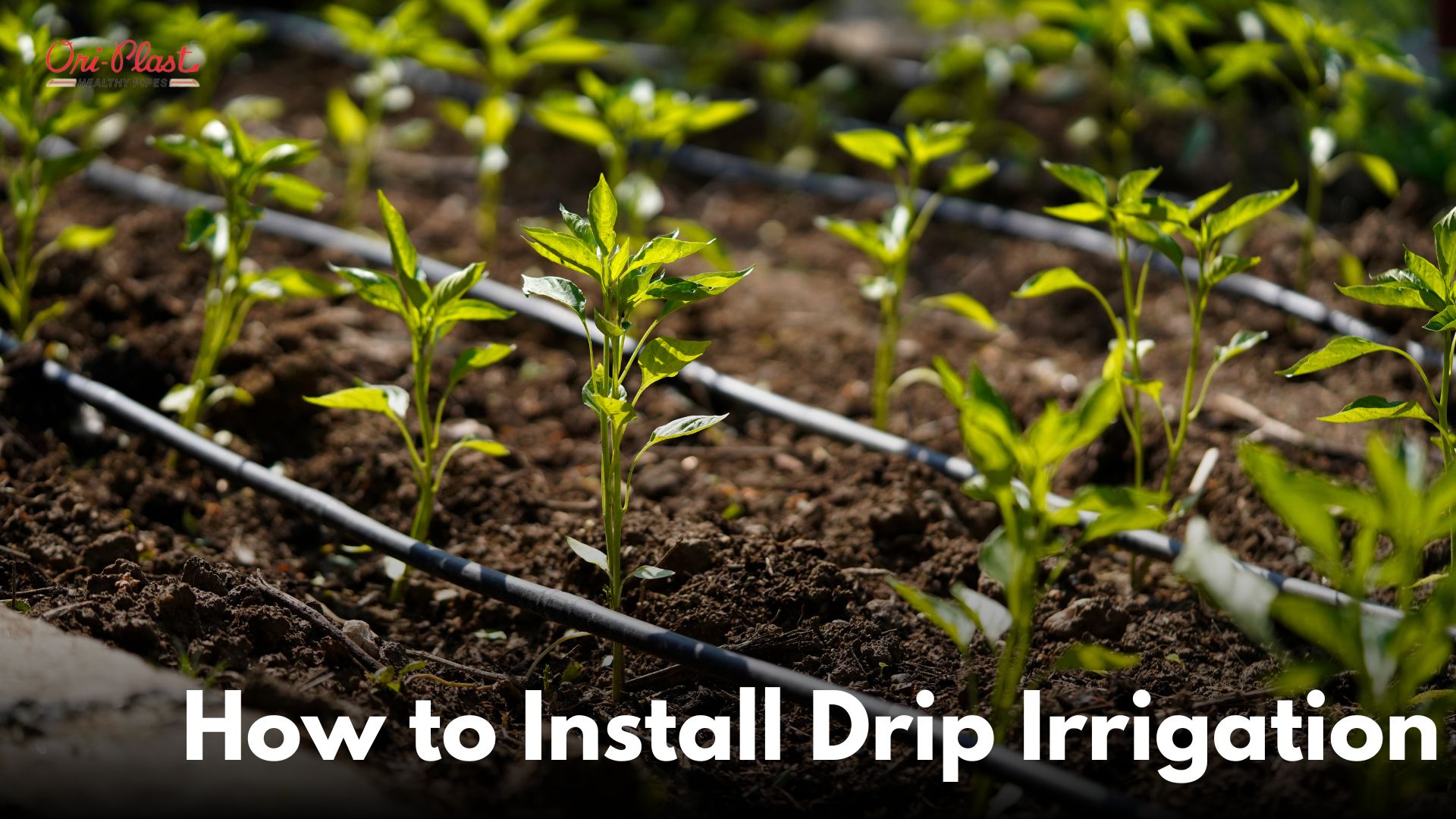
To understand how to set up drip irrigation for small farms, start by mapping the field and identifying crop rows, water source, and slope. Then choose the mainline, sub-main line, lateral lines, and emitters based on crop spacing. A smart drip irrigation system for agriculture should fit the land, not force the land to fit the system.
Next, install the pipes in a way that keeps water flow balanced across the plot. Proper planning makes a big difference, especially in compact farms where every square meter matters. This is also why farmers look for farm irrigation pipe solutions that are easy to expand later.
Installation steps that make a difference
Simaa said, “I’m worried the setup will be too technical.” Pritam replied, “Not if you follow the right sequence.”
Here is the practical flow for drip irrigation installation steps:
1. Mark the field layout
Measure the area, crop rows, and water source so the system can be planned accurately.
2. Install the mainline
Use suitable pipes that can handle flow and pressure. This is where drip irrigation pipe for agriculture becomes important.
3. Add sub-mains and laterals
These distribute water across the crop area evenly.
4. Fix the fittings and emitters
Good drip irrigation fittings for farms ensure the system stays secure and efficient.
5. Test the system
Run water through the line and check every joint for leaks or pressure drops.
A properly installed drip irrigation system for agriculture saves both time and water from the first season itself.
[caption id="attachment_43494" align="aligncenter" width="800"]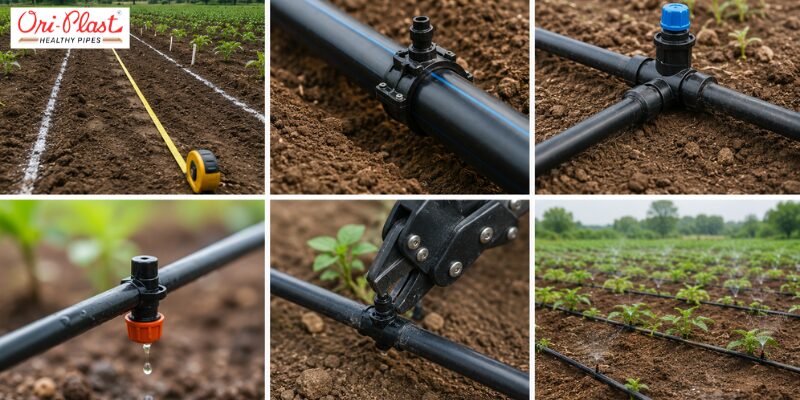 Image Source : AI Generated[/caption]
 Why PE pipes are preferred
Simaa asked, “Why do people keep talking about PE pipes?” Pritam replied, “Because they are flexible, practical, and dependable in field conditions.”
Farmers often ask why PE pipes are used in irrigation. The answer is simple: they are lightweight, adaptable, and suitable for field movement and seasonal agricultural use. In many cases, PE pipes for irrigation use are easier to install than rigid alternatives, especially for small and medium farms.
When farmers compare materials, the best pipe material for drip irrigation is usually the one that offers the right mix of strength, flexibility, and affordability. That is one reason HDPE pipes for drip irrigation remain a common choice for modern farm systems.
How to keep the system efficient
Simaa said, “Once I install it, how do I make it work well?” Pritam replied, “That depends on maintenance, pressure control, and regular checks.”
A drip irrigation system for agriculture becomes more effective when farmers monitor water pressure and clean the system on time. Clogged emitters, dirt buildup, and unnoticed leaks can reduce performance quickly. That is why it is important to learn how to make drip irrigation efficient from the start.
Here are the habits that matter most:
- Keep the filtration unit clean.
- Check pressure levels regularly.
- Flush the lines after periods of use.
- Remove any blocked emitters.
- Inspect the field after every irrigation cycle.
These simple practices help turn a basic drip irrigation system for agriculture into a reliable farm asset.
Leakage and cleaning basics
Simaa said, “What if the water is leaking somewhere?” Pritam replied, “Then the whole system loses efficiency, so you need to inspect it regularly.”
Farmers should know how to check leakage in drip system by walking the lines, observing water flow, and checking joints and connectors. Even a small leak can waste water and affect crop health. That is why many buyers now prefer leak proof irrigation pipe fittings from trusted suppliers.
It is equally important to learn how to clean drip irrigation lines. Sediment and debris can clog emitters over time, especially in areas where water quality changes seasonally. Regular cleaning keeps the drip irrigation system for agriculture running smoothly and helps protect the investment.
[caption id="attachment_43493" align="aligncenter" width="800"]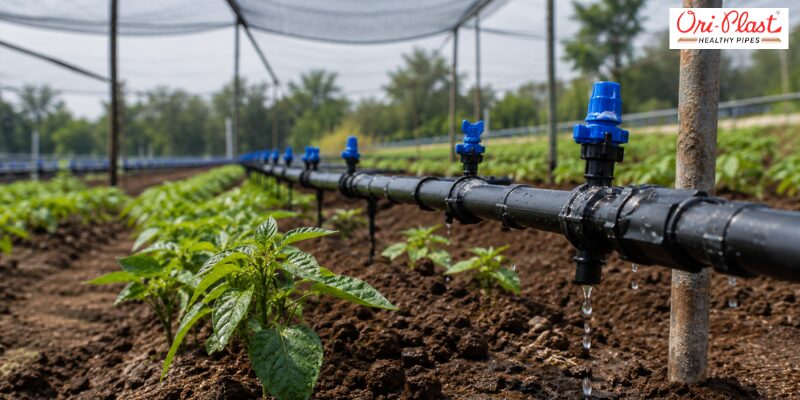 Image Source : AI Generated[/caption]
 Buying the right system
Simaa said, “There are so many options online. How do I decide?” Pritam replied, “Look for quality, fit, and support — not just price.”
If you are planning to buy drip irrigation pipe, compare product strength, compatibility, and service support. The same applies when you buy HDPE fittings for irrigation or drip irrigation fittings. A low-cost product may look attractive at first, but it can become expensive later if it leaks, cracks, or needs replacement.
Farmers who want a buy water saving irrigation system approach should focus on long-term value. The right irrigation pipe supplier India can help you choose the correct sizes, fittings, and layout for your crop and land conditions. That support matters as much as the material itself.
A simple farm decision
Simaa finally said, “So this isn’t just about pipes, it’s about planning.” Pritam nodded and replied, “Exactly. A drip irrigation system for agriculture works best when the design, product quality, and maintenance all come together.”
For small and medium farms, this system is one of the most practical water saving methods for agriculture. It reduces waste, supports better crop performance, and makes irrigation more controlled. And because it can be scaled, a farmer can start small and grow the setup over time.
If your goal is to build a dependable drip irrigation system for agriculture, start with good pipes, strong fittings, and a layout that matches your crops. That is how farmers get better results season after season.