Rakesh spent an entire Sunday under his kitchen sink with a wrench in one hand and a torch in the other, trying to figure out why the same section of pipe kept cracking every monsoon while the rest of the plumbing held fine. His plumber finally showed up, took one look, and said, "Wrong pipe for this spot," before handing him a scrap of black, slightly flexible tubing next to the brittle white piece he'd pulled out. Rakesh stood there holding both, realizing he had no real idea what separated them, or why one had failed in under three years while a similar-looking pipe in his neighbour's courtyard had survived a decade without a single leak.
That confusion is more common than most people admit. Somewhere between the hardware store counter and the actual installation, homeowners, farmers, and even small contractors end up guessing rather than knowing, and the guess often costs them a redo six months later. Understanding the difference between HDPE and PVC pipes isn't a technical luxury reserved for engineers — it's the one piece of knowledge that decides whether your plumbing survives a decade or gives up after two monsoons.
The Silent Pipe Problem Nobody Warns You About
Most people don't think about pipes until something goes wrong — a burst joint, a slow leak behind a wall, a borewell line that snaps under pressure. By then, the damage is already done, and the question of which material would have handled the job better feels almost pointless. Yet this is exactly where the difference between HDPE and PVC pipes quietly decides outcomes long before anyone notices a problem.
Why This Confusion Costs Homeowners More Than Money
A wrongly chosen pipe rarely fails on day one. It fails slowly — a hairline crack that widens with every temperature swing, a joint that loosens after repeated pressure changes, a buried line that shifts with the soil. Families in Kolkata, where humid summers and heavy monsoon runoff put constant stress on drainage lines, often discover this the hard way when an older rigid pipe cracks underground and nobody notices until the garden starts flooding. The fix isn't usually expensive on its own, but the excavation, the labour, and the disruption add up fast.
Difference Between HDPE and PVC Pipes Starts With What They're Made Of
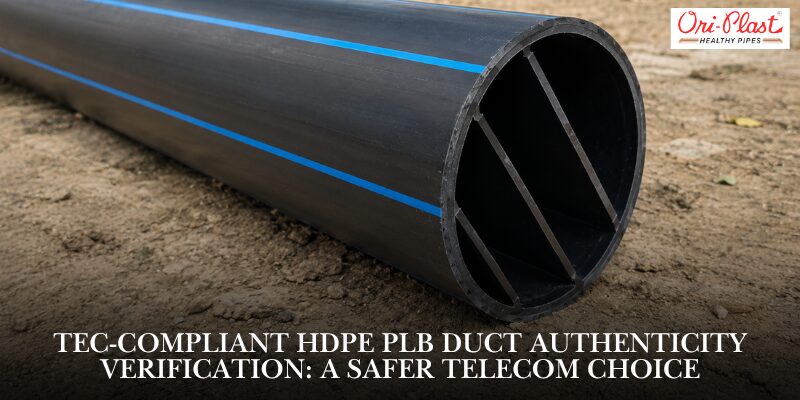
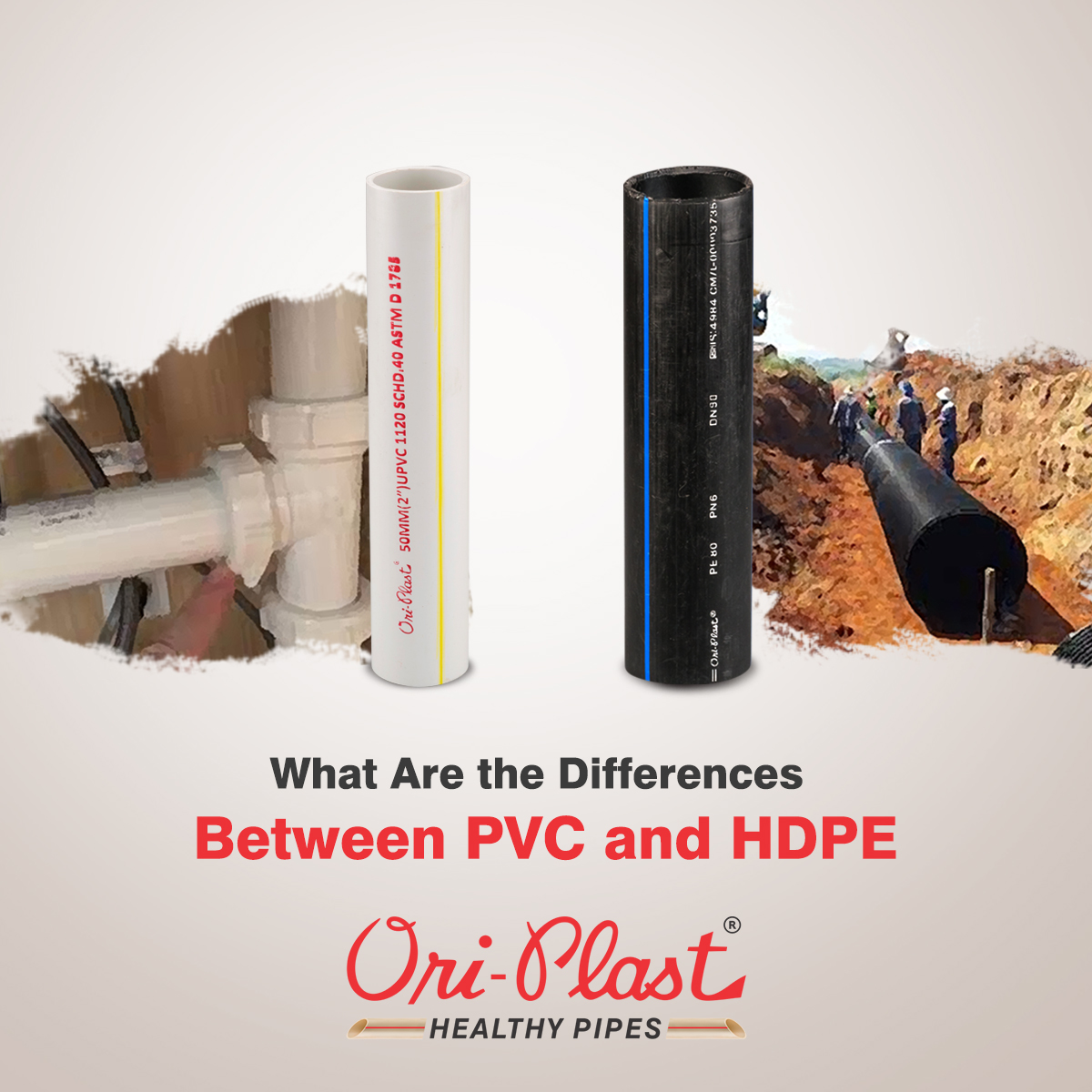
At the most basic level, both are plastic pipes, but the resemblance stops there. HDPE, or high-density polyethylene, is a softer, more flexible polymer that bends without cracking and fuses into continuous, joint-free lengths through heat welding. PVC, or polyvinyl chloride, is rigid by comparison, built from a different chemical backbone that gives it strength and a smooth interior surface but very little give when the ground shifts beneath it.
The Core Difference Between HDPE and PVC Pipes in Flexibility
Flexibility is where the two materials part ways most obviously. HDPE pipe can curve gently around obstacles underground, absorb minor ground movement, and handle freeze-thaw cycles without snapping. PVC, being rigid, needs more fittings and elbows to change direction, and while it holds its shape beautifully under steady conditions, sudden shifts in soil — common in regions like Raipur, where seasonal ground movement after heavy rains is a known issue for buried lines — can stress a rigid joint far more than a flexible one. Farmers around Raipur who've switched to HDPE for their field lines often mention fewer joint failures after the first few monsoons.
How Temperature Changes Affect Each Material
Heat behaves differently across the two. PVC becomes brittle in extreme cold and can soften slightly under intense heat, which matters in places with sharp seasonal swings. HDPE tolerates a wider temperature range without losing structural integrity, which is part of why it's favoured for exposed outdoor lines and borewell casings that sit under direct sun for years.
Chemical and UV Resistance Compared
Both resist most household chemicals well, but HDPE edges ahead on prolonged UV exposure and aggressive soil chemistry, while PVC — especially uPVC — offers a smoother bore that keeps water flow efficient over long, straight runs. Neither is universally "better"; each was built for a different kind of stress.
Where the Difference Between HDPE and PVC Pipes Matters Most in Real Use
Theory matters less than what happens once a pipe is buried, pressurised, or left exposed to the elements for years.
Difference Between HDPE and PVC Pipes for Farms, Borewells, and Drainage
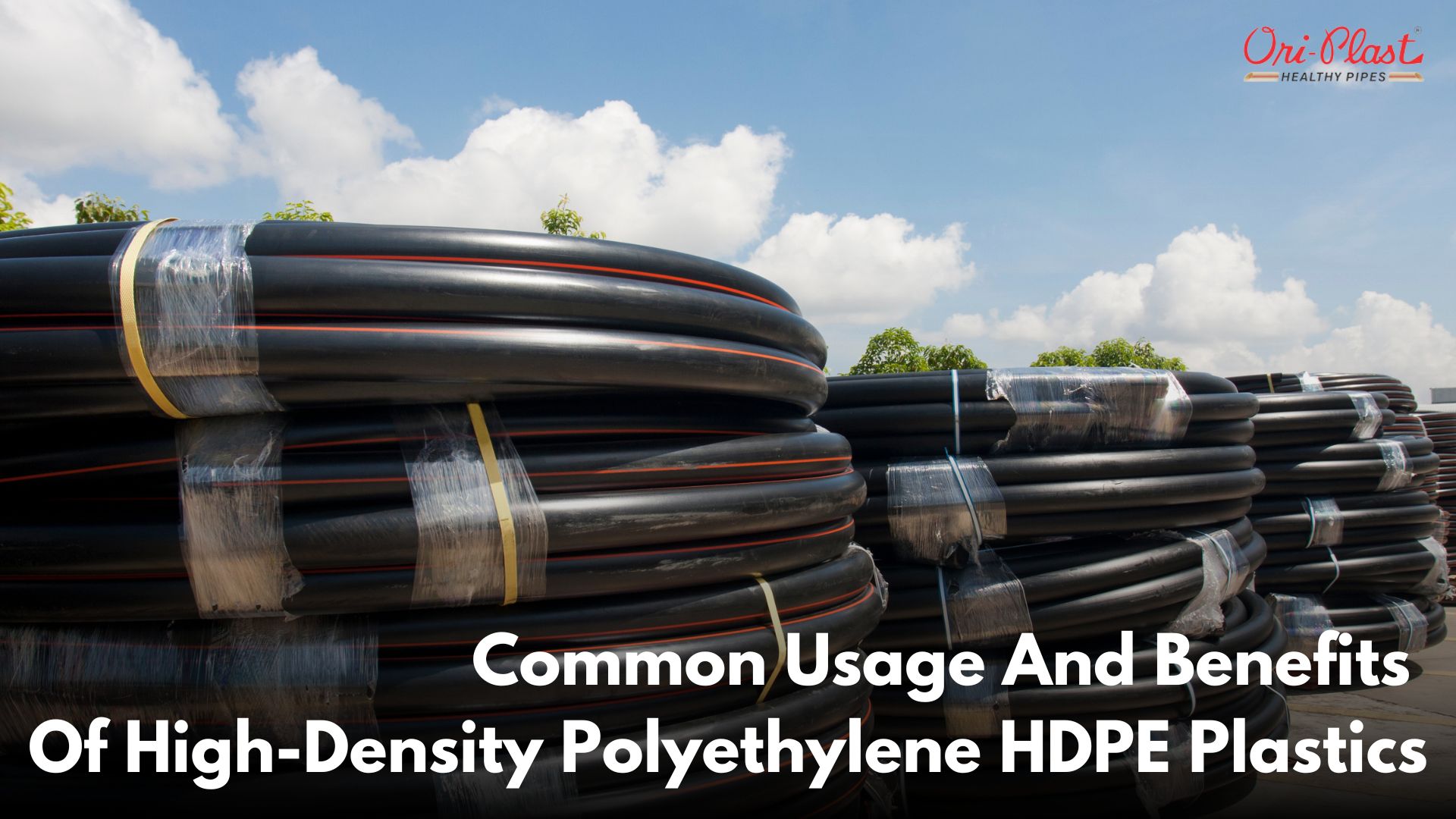
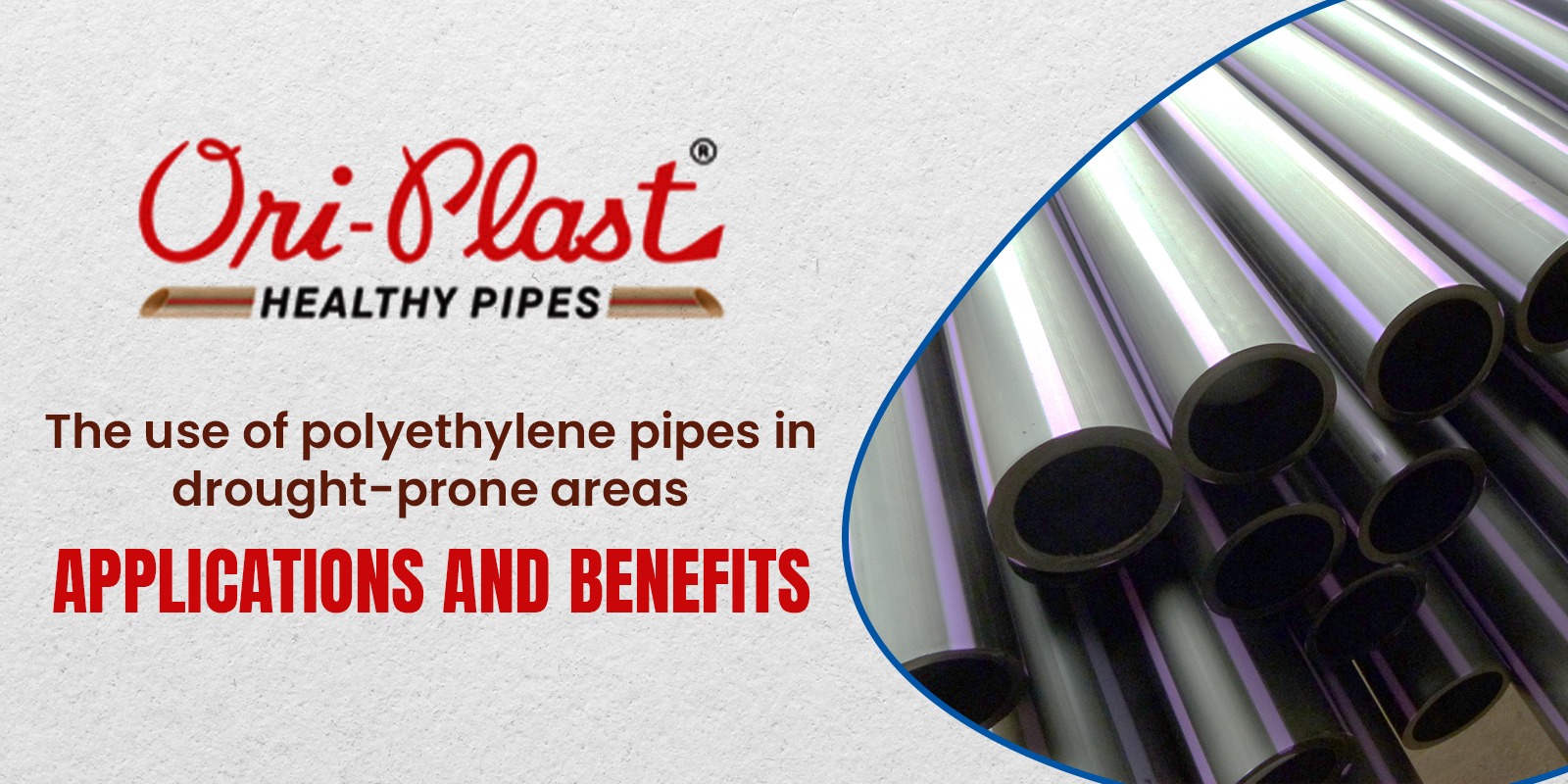
Agricultural and borewell applications lean heavily toward HDPE because of its flexibility and resistance to impact during installation, especially across long, uneven field runs. Families in Guwahati and across parts of Assam, where irrigation lines often snake through soft, waterlogged terrain, tend to prefer HDPE for exactly this reason — it bends with the land instead of fighting it. PVC, meanwhile, remains the standard for indoor plumbing, drainage stacks, and sewage lines where rigidity and a clean interior surface matter more than flexibility. Local contractors around Guwahati have also pointed out that fewer buried joints mean fewer excavation call-outs each year, which matters in a region where digging up a flooded field to fix a leak is nobody's idea of a good afternoon, and the same pattern shows up in other parts of Assam with similarly soft, shifting soil.
Choosing Pipe Diameter for Long Agricultural Runs
Wider diameters reduce friction loss over long distances, which matters more for irrigation lines stretching across several acres than for a short domestic connection. Getting this sizing right, alongside the correct material, is often what separates a system that runs efficiently for fifteen years from one that needs constant pressure troubleshooting.
Plumbing, Drainage, and Indoor Applications
Inside a home, PVC dominates for a reason — it's rigid enough to stay put behind walls, resistant to most household chemicals, and easy to solvent-weld into a clean, leak-resistant system. Drainage and sewage lines, where gravity does most of the work, benefit from PVC's smooth bore and predictable shape far more than they would from a flexible material.
Cost, Installation, and Long-Term Durability
Cost comparisons rarely tell the full story on their own. PVC pipe is often slightly cheaper upfront and easier for local plumbers to fit using widely available solvent cement, which makes it the default choice across most Indian cities. HDPE tends to cost a little more initially but often saves money over the pipe's lifetime because heat-fused joints simply don't leak the way glued or threaded PVC joints occasionally do. Industry estimates suggest joint failure remains one of the leading causes of underground pipeline leaks in India, which is exactly the weak point HDPE's fusion welding is designed to eliminate. That cost gap, in a sense, is really just the price of the difference between HDPE and PVC pipes playing out over decades of underground stress rather than in a single invoice.
What Installation Actually Involves for Each Pipe Type
PVC installation is fast and familiar — cut, prime, cement, and let it cure. HDPE needs butt-fusion or electrofusion welding equipment, which takes more skill but produces a joint that's often stronger than the pipe itself. Contractors in Punjab, where large agricultural cooperatives have started shifting toward HDPE for shared irrigation networks, note that the upfront training pays off in far fewer callbacks for leaks — a pattern Punjab's farming communities have essentially field-tested over several seasons.
So, Which Pipe Should You Actually Choose?
There isn't a single winner here, and anyone claiming otherwise is oversimplifying a decision that depends entirely on where the pipe will live. For buried agricultural lines, borewells, and anywhere ground movement or long, curved runs are involved, HDPE tends to be the safer long-term investment. For indoor plumbing, drainage, and straightforward vertical or horizontal runs where rigidity and cost matter more, PVC remains a dependable, budget-friendly choice.
Homeowners in Jaipur, where extreme summer heat tests both materials differently, often end up using both — HDPE for the underground water supply line running in from the street, and PVC for the internal plumbing once water reaches the house. That combination, more than any single "better" material, is usually what actually works, and it's a fair summary of the difference between HDPE and PVC pipes in practice: each one earns its place rather than competing for the same job. The same logic applies whether you're in Jaipur or anywhere else with harsh seasonal swings: match the material to the job, not the other way around.
Families researching drainage upgrades in Odisha have reported similar mixed setups, pairing HDPE for exposed or buried exterior runs with PVC for interior fittings, largely because it lets each pipe do the job it was actually engineered for. Odisha's coastal humidity adds another layer to that decision, since HDPE's resistance to moisture-driven degradation tends to hold up better along the coast over time.
A Quick, Practical Way to Decide
If the pipe will be buried, curved, or exposed to shifting soil, lean toward HDPE pipes. If it's indoor plumbing or a short, straight run, PVC and uPVC pipes usually make more sense. For irrigation-heavy properties, agricultural pipe systems built for long field runs are worth a look, while household lines are often better served by dedicated water supply pipe ranges. Whichever you choose, getting the installation right matters as much as the material itself, and a quick look at the full product range before you buy can save a second trip to the shop.
Rakesh, for what it's worth, ended up replacing his cracked kitchen line with PVC and swapped the exterior feed running from his street connection to HDPE. Two monsoons later, neither has given him a reason to pick up that wrench again. If you're weighing the same decision, a browse through more plumbing and piping guides is a good next step before you commit to either material.
Frequently Asked Questions
1. What is the main difference between HDPE and PVC pipes?
HDPE is flexible, heat-welded into joint-free lengths, and handles ground movement well, while PVC is rigid, glued at joints, and better suited to straight indoor plumbing runs.
2. Which pipe lasts longer, HDPE or PVC?
Both can last decades when installed correctly, but HDPE's fused joints often reduce leak-related failures over the pipe's lifetime compared to glued PVC joints.
3. Is HDPE pipe more expensive than PVC?
HDPE usually costs a little more upfront due to the welding equipment required, but it can save money long-term through fewer joint failures.
4. Can HDPE and PVC pipes be connected together?
Yes, with the right transition fittings, HDPE and PVC sections can be joined, which is common when a property uses HDPE outdoors and PVC indoors.
5. Which pipe is better for borewells?
HDPE is generally preferred for borewells because of its flexibility, impact resistance, and ability to handle the pressure of deep water columns.
6. Is PVC pipe safe for drinking water?
Yes, food-grade uPVC pipe is safe for potable water when it meets relevant quality standards and is installed correctly.
7. Which pipe handles temperature changes better?
HDPE tolerates a wider range of temperatures without becoming brittle, while PVC can turn stiff in extreme cold and slightly soft under intense heat.
8. Why do farmers often prefer HDPE pipe?
HDPE bends around uneven terrain, resists cracking during installation, and its joint-free runs reduce the leak points common in long agricultural lines.
9. Is PVC pipe easier to install than HDPE?
Generally yes. PVC uses simple solvent cement and requires less specialised equipment than HDPE's fusion-welding process.
10. Which pipe is better for underground drainage?
PVC's rigidity and smooth interior bore make it a strong choice for gravity-fed drainage and sewage lines inside and around buildings.
11. Does HDPE pipe require special tools to install?
Yes, HDPE typically needs butt-fusion or electrofusion welding equipment, which takes more training than standard PVC solvent welding.
12. Can PVC pipe be used outdoors?
Yes, but prolonged direct UV exposure can degrade PVC faster than HDPE, so UV-stabilised variants are recommended for exposed outdoor use.
13. Which pipe is more resistant to chemicals?
Both resist common household chemicals well, though the right choice depends on the specific chemical exposure expected in that application.