
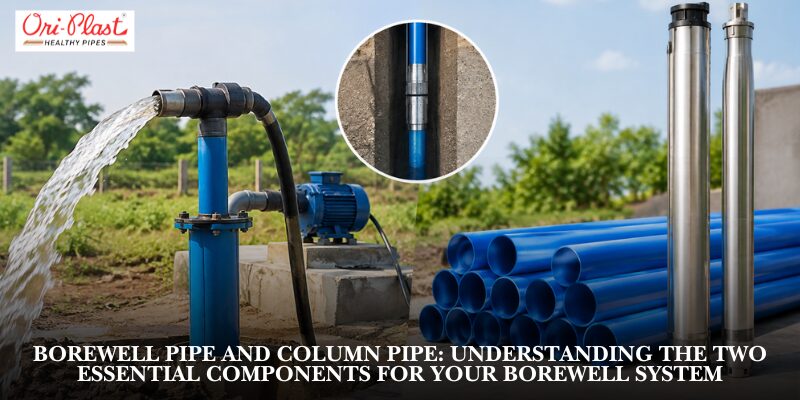
Farmers across India face a frustrating reality every monsoon season. A borewell drilled at great expense suddenly stops delivering water. The pump runs dry. Crops wither. The culprit? Often, it's not the pump or the water table—it's choosing the wrong pipe. Many borewell owners don't realize that borewell systems need two distinct types of pipes, each with a specific purpose. Confusing them can lead to system failure, costly repairs, and lost harvests.
Understanding the difference between borewell pipe and column pipe isn't just technical jargon—it's the difference between a reliable water supply and a failed investment. Let's break down everything you need to know, starting with certified borewell and column pipes built to IS standards.
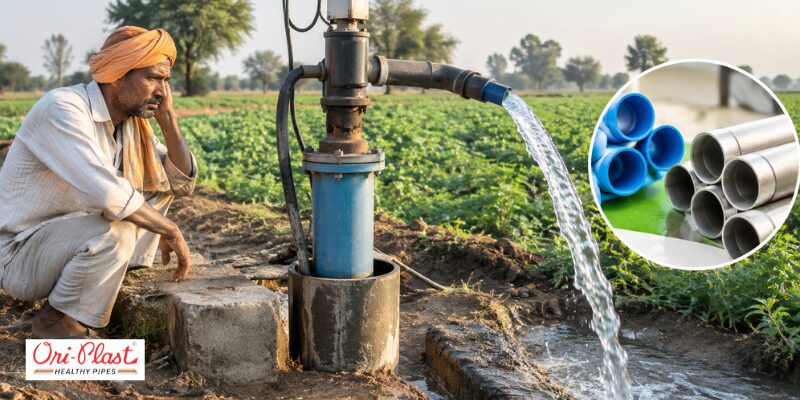 Image Source : AI Generated
 What Exactly Is the Difference Between Borewell Pipe and Column Pipe?
The confusion starts with terminology. "Borewell pipe" is often used as a blanket term, but in reality, it refers to casing pipe—the outer lining that protects the borehole from collapsing. A column pipe, on the other hand, is the inner pipe that carries water from the submersible pump to the surface.
Think of it this way: casing pipe is like the foundation of a house, holding the structure together. The column pipe is like the plumbing inside, actually moving water where it's needed. Mixing them up is like using foundation bricks for your water pipes—they're built for entirely different jobs.
A farmer in Assam recently shared how his borewell failed after just two years. The installer had used a column pipe as a casing pipe to cut costs. When the soil shifted during heavy rains, the borehole collapsed. The entire system had to be redrilled, doubling the original expense. This is why knowing the difference between borewell pipe and column pipe matters.
Casing Pipe: The Borewell's Protective Shield
Casing pipe lines the walls of the borehole. Its job is structural—it prevents soil from caving in, keeps surface contaminants out, and maintains the integrity of the well. Made from uPVC, PVC, or HDPE, casing pipes come in different classes (CS, CM, CD) based on borewell depth and soil pressure. Many contractors pair casing systems with uPVC pipes & fittings suited to borewell casing applications for corrosion resistance across varying soil types.
In regions with loose sandy soil, like parts of Punjab, ribbed casing pipes (CM class) provide extra grip against the surrounding earth. Farmers working with borewell casing pipe suppliers in Punjab should ask specifically for CM-class stock when installing in shifting sandy terrain. For deeper borewells in rocky terrain, thicker CD-class pipes are essential. The Indian standard IS 12818 specifies exact thickness and thread requirements to ensure safety.
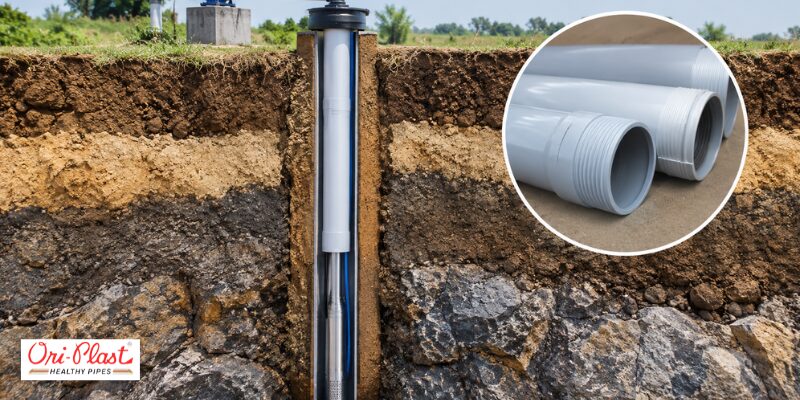 Image Source : AI Generated
 Column Pipe: The Water Carrier
Column pipe connects the submersible pump to the surface outlet. It must withstand vertical load (the weight of the pump), internal water pressure, and constant vibration from the motor. Unlike casing pipe, column pipe has threaded joints—either square or buttress threads—designed to hold the pump securely.
A submersible pump hanging from a weak column pipe is a disaster waiting to happen. If the pipe fails, the pump drops into the well, requiring expensive retrieval or replacement. That's why choosing the best column pipe for submersible pump applications is critical for long-term reliability, and why complete borewell piping solutions engineered for pump load matter as much as the casing itself.
Why Confusing These Pipes Leads to Costly Mistakes
Using column pipe as casing pipe might seem like a cost-saving measure, but it's a false economy. The column pipe isn't designed to resist external soil pressure. Over time, it can crack or collapse, allowing sand and silt to enter the borewell. This damages the pump and reduces water quality.
Conversely, using a casing pipe as a column pipe is equally dangerous. The casing pipe lacks the threaded joints and load-bearing capacity needed to support a submersible pump. The pump can detach and fall, causing irreparable damage.
Industry data shows that nearly 40% of borewell failures in India stem from incorrect pipe selection or substandard materials. This isn't just about technical specs—it's about protecting your investment and ensuring your farm or home has reliable water access for decades.
Real-World Consequences of Wrong Pipe Selection
Consider a borewell installation in Raipur where the contractor used a plain casing pipe (CS class) for a 400-foot deep well. Within months, the pipe buckled under soil pressure. Sand started entering the system, clogging the pump. The owner had to replace the entire casing, costing three times the original pipe expense. Working with established borewell pipe manufacturers in Raipur who verify soil conditions before recommending a class would have prevented this.
Similarly, in Jaipur, a farmer opted for the cheapest column pipe available. The threads wore out within a year, and the pump dropped 200 feet into the well. Retrieval costs exceeded ₹50,000—far more than investing in quality pipe from the start. This is a common story among column pipe suppliers in Jaipur dealing with budget-driven purchases.
These stories highlight why working with borewell pipe wholesale suppliers who understand IS standards and can guide proper selection is essential.
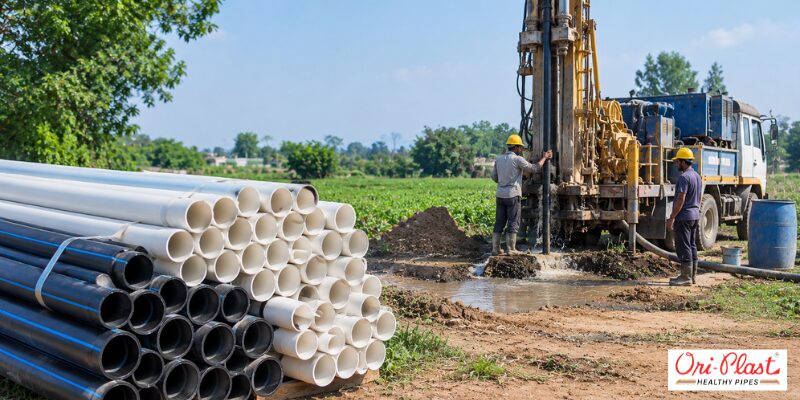 Image Source : AI Generated
 How to Choose the Right Pipe for Your Borewell System
Selecting the correct pipe depends on three factors: borewell depth, soil type, and pump capacity. Here's a practical guide:
- For Shallow Borewells (Up to 200 feet) Casing Pipe: CS class (plain), 4-inch or 6-inch diameter Column Pipe: 1.5-inch or 2-inch, square thread, uPVC or HDPE Best For: Residential use, small farms
- For Medium Borewells (200-400 feet) Casing Pipe: CM class (ribbed), 6-inch diameter Column Pipe: 2-inch or 2.5-inch, buttress thread, reinforced uPVC Best For: Medium farms, commercial use
- For Deep Borewells (400+ feet) Casing Pipe: CD class (heavy-duty), 6-inch or 8-inch diameter Column Pipe: 2.5-inch or 3-inch, buttress thread, high-load capacity Best For: Large farms, industrial applications
When sourcing materials, look for borewell pipe brands in India that provide IS 12818 certification. This ensures the pipe meets national safety and quality standards, and it's worth learning how to verify ISI mark on PVC pipes before accepting any delivery.
Material Matters: PVC vs HDPE vs GI
The material you choose affects longevity and performance:
uPVC Casing Pipe: Lightweight, corrosion-resistant, cost-effective. Ideal for most soil types. HDPE Casing Pipe: Flexible, excellent for shifting soil. Slightly higher cost but superior durability. Farmers evaluating flexible options often compare PE pipes & fittings for shifting-soil borewell applications against standard uPVC casing. GI Column Pipe: Traditional choice, strong but prone to corrosion over time. uPVC Column Pipe: Modern standard, rust-proof, lighter, easier to install.
For coastal areas or regions with hard water, uPVC is increasingly preferred over GI due to its resistance to scaling and chemical reactions.
Working with Trusted PVC Column Pipe Manufacturers India
Not all pipe manufacturers are created equal. The best borewell pipe manufacturer India will provide:
IS 12818 certification for casing pipes Load-bearing test reports for column pipes Clear thickness and thread specifications Warranty and after-sales support
Top column pipe brands India invest in quality control and testing facilities. They don't just sell pipe—they offer technical guidance to ensure proper selection and installation.
When evaluating column pipe manufacturers, ask for samples and check the thread quality. Square threads should be sharp and uniform. Buttress threads should have a distinct angled profile designed for heavy loads.
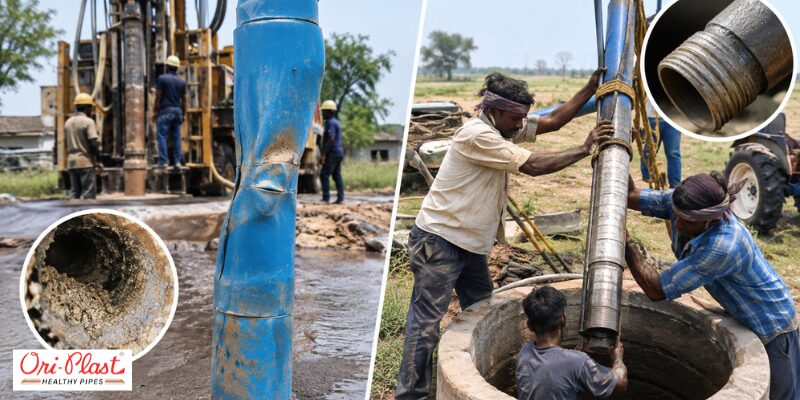 Image Source : AI Generated
 Sourcing from Reliable uPVC Borewell Casing Pipe Suppliers
Borewell casing pipe suppliers India should stock multiple classes (CS, CM, CD) and diameters. They should also provide installation guidance and connect you with certified installers if needed. Reviewing proper pipe storage and handling before installation is a good first check when vetting any supplier.
Working directly with manufacturers or authorized distributors ensures you're getting genuine products, not substandard imitations. Many borewell pipe wholesale suppliers offer bulk discounts for large projects, making quality pipe more affordable, particularly through borewell pipe distributors serving Kolkata and eastern India.
Installation Tips to Maximize Pipe Lifespan
Even the best pipe can fail if installed incorrectly. Follow these guidelines:
Casing Pipe Installation- Lower casing pipe slowly to avoid hitting borehole walls
- Use proper couplers with rubber rings for leak-proof joints
- Ensure the bottom of the casing has a proper shoe or cap
- Seal the top of the casing to prevent surface water entry
- Check thread condition before assembly
- Use thread sealant or Teflon tape for watertight joints
- Secure the pump with a safety chain as backup
- Test the system under load before finalizing installation
These steps follow the same step-by-step PVC pipe installation guidelines used across Oriplast's borewell and column pipe projects. A well-installed system from a borewell pipe brand in India leader can last 20-30 years with minimal maintenance.
Common Problems and How to Avoid Them
Sand ingress, pump failure, and pipe collapse are the top three borewell issues. Most are preventable:
Sand Ingress: Use proper casing perforation and gravel packing Pump Failure: Choose the best column pipe for submersible pump with adequate load capacity Pipe Collapse: Select the correct casing class for your depth and soil type
Regular inspection and maintenance can catch issues early. Listen for unusual pump noises, monitor water flow, and check for sediment in the water.
Why Oriplast Stands Out Among Borewell Pipe Brands in India
With over five decades of experience, Oriplast has established itself as a best borewell pipe manufacturer India with multiple manufacturing plants across eastern and northern India. The company's commitment to IS standards, quality testing, and customer education sets it apart.
Oriplast's uPVC and HDPE pipes are designed for Indian conditions—varying soil types, extreme temperatures, and hard water. Their technical team provides free consultation to help farmers and contractors select the right pipe for each project.
From Guwahati to Kolkata, Oriplast's distribution network ensures timely delivery and local support, backed by borewell and column pipe stock available in Guwahati. This accessibility, combined with competitive pricing and proven quality, makes Oriplast a preferred choice among top column pipe brands India.
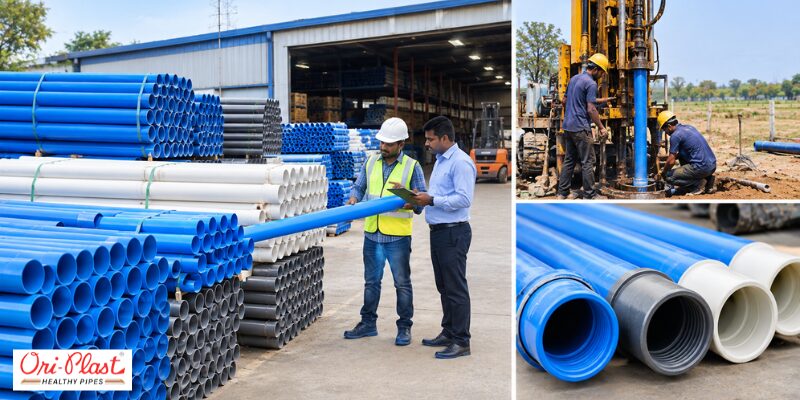 Image Source : AI Generated
 Getting Started with Your Borewell Project
Before drilling, consult with a hydrogeologist to determine optimal depth and location. Then, work with certified PVC column pipe manufacturers India to select the right casing and column pipes. Don't cut corners on pipe quality—it's the backbone of your entire system.
Investing in the right pipe from the start saves money, time, and stress in the long run. Whether you're installing a borewell for your home or your farm, understanding the difference between borewell pipe and column pipe is your first step toward a reliable water supply. For more guides like this, browse Oriplast's full library of plumbing and piping resources.