A telecom project can lose valuable time before the first cable is even installed. The duct may arrive with attractive packaging, a low price, and claims of technical compliance—but once the installation begins, the problems become visible. The inner surface may create excessive friction, the duct may not match the promised dimensions, or the supplier may be unable to provide valid test documents.
These issues can lead to cable damage, repeated installation work, project delays, and unexpected maintenance expenses. For contractors working across locations such as Kolkata, choosing a duct only by appearance or price is a risky decision. A reliable procurement process must include product verification, technical documentation, and supplier evaluation.
That is where TEC-compliant HDPE PLB duct authenticity verification becomes essential.
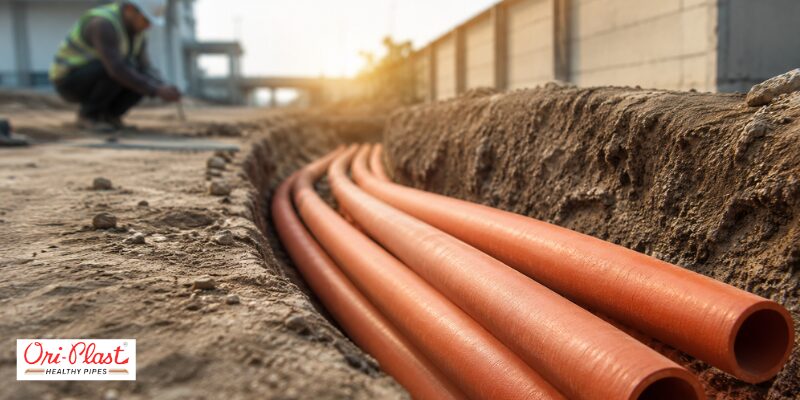 Image Source - AI enerated
 Why TEC-Compliant HDPE PLB Duct Authenticity Verification Matters
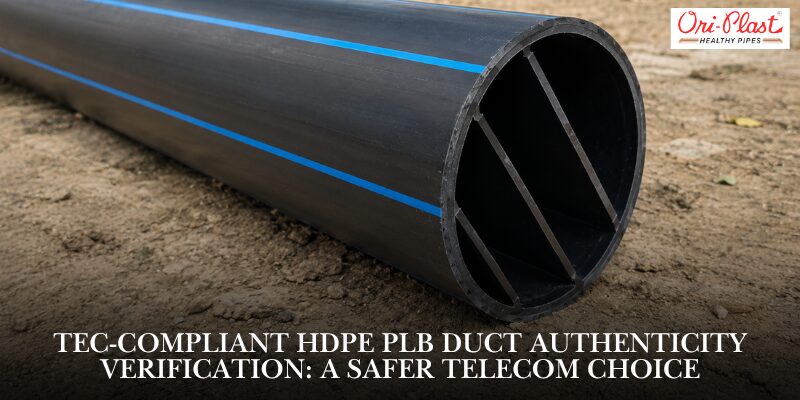
A TEC-compliant HDPE PLB duct is designed to provide a protected pathway for underground optical-fiber cables. PLB means "permanently lubricated," referring to the low-friction inner layer that helps cables move smoothly during pulling or blowing operations.
However, not every product described as a PLB duct offers the same performance. Some products may use incomplete markings, unclear specifications, copied certificates, or unsupported compliance claims. A contractor may believe the product is suitable for a telecom project, only to discover that its physical or performance characteristics do not match the project requirements.
The official TEC documentation covers requirements for PLB HDPE ducts used as underground optical-fiber cable conduits. It also refers to type evaluation, factory testing, and the need for product instructions and maintenance information.
Authenticity verification helps buyers confirm:
- The actual identity of the manufacturer
- The product's dimensions and construction
- The applicable TEC specification
- The availability of factory and type-test documents
- The consistency between the supplied product and the approved sample
- The legitimacy of any certification or licence claim
A trustworthy HDPE telecom duct supplier in India should be able to explain these details clearly instead of providing only a brochure or verbal assurance — much the same way genuine PE Pipes & Fittings manufacturers back their products with traceable documentation rather than promises alone.
What Is a TEC-Compliant HDPE PLB Duct?
A TEC-compliant HDPE PLB duct is a high-density polyethylene telecom conduit manufactured to meet applicable Telecommunication Engineering Centre requirements. It is generally used to protect optical-fiber cables in underground networks, including broadband, FTTH, 5G, highway, railway, smart-city, and long-distance communication projects.
The duct normally contains a smooth, permanently lubricated inner layer. This reduces resistance when an optical-fiber cable is installed. The outer HDPE layer provides flexibility, impact resistance, and protection from underground conditions.
TEC compliance should not be treated as a decorative label. It should be supported by relevant product specifications, test reports, manufacturing information, and traceable documentation. A buyer should also confirm whether the particular duct size, construction, and intended application are covered by the claimed requirements.
The 2025 TEC test-guide search result describes procedures for evaluating the conformance, functionality, performance, and requirements of permanently lubricated HDPE telecom ducts.
Image Source - AI enerated How TEC-Compliant HDPE PLB Duct Authenticity Verification Works
A practical verification process can be completed before accepting a large project order.
1. Check the Product Marking
Look for permanent and readable markings on the duct. These may include the manufacturer's name or identification, product type, outside and inside diameter, manufacturing details, standard reference, and batch information.
Do not depend on a removable sticker alone. Markings should be consistent along the product length or at the intervals specified for the product. The same discipline applies when buyers verify the ISI mark on PVC pipes — permanent, legible markings are the first line of defence against counterfeit material.
2. Match the Specifications
Compare the dimensions on the product with the purchase order, technical datasheet, and project requirement. A product described as a 40/33 mm duct, for example, should not be accepted without checking whether the measured outside and inside diameters are consistent with the declared size.
Also check wall thickness, coil length, colour, inner-layer construction, and recommended cable diameter. A mismatch between the supplied material and the technical document is a warning sign.
3. Request Test Documents
Ask the manufacturer or supplier for applicable factory test reports and type-test documents. The documents should identify the product, test method, sample details, date, laboratory or testing facility, and result.
Relevant performance checks may include impact strength, crush resistance, tensile properties, environmental stress cracking, dimensional stability, internal friction, and cable-blowing performance. The exact tests depend on the applicable TEC requirement and procurement specification.
4. Verify the Manufacturer
A credible HDPE cable conduit manufacturer in India should provide a verifiable company address, manufacturing location, quality contact, product catalogue, and technical support. Check whether the company has the infrastructure to manufacture the quantity required for your project.
A supplier who refuses to share basic product information or changes company details across documents should be evaluated carefully.
5. Inspect the Delivery
Before unloading the entire consignment, inspect a sample of the ducts. Look for surface cracks, ovality, rough edges, inconsistent colour, poor coiling, contamination, and damage caused during transportation.
Record batch numbers and take photographs. These records can support quality claims if the supplied material does not meet the agreed specifications. Proper handling continues after delivery, too — the same storage and handling principles that protect PVC and PE pipe stock apply equally to telecom duct coils awaiting installation.
Why HDPE PLB Duct Is Used in Telecom Infrastructure
Telecom cables often pass through challenging environments. They may be installed beneath roads, pavements, agricultural land, industrial areas, and crowded urban corridors. Repairing a damaged underground fiber cable can be expensive and disruptive.
HDPE PLB ducts help create a dedicated passage for the cable. The duct separates the sensitive fiber from surrounding soil, stones, moisture, construction activity, and accidental contact during future excavation.
The permanently lubricated inner surface is especially useful when cables are installed by blowing. Lower friction allows the cable to travel farther with less stress, provided the installation method, cable weight, air pressure, duct condition, and bend radius are properly controlled.
The outer HDPE wall also offers flexibility. Instead of requiring a rigid, perfectly straight route, the duct can follow gradual changes in alignment. This makes it suitable for many underground infrastructure applications.
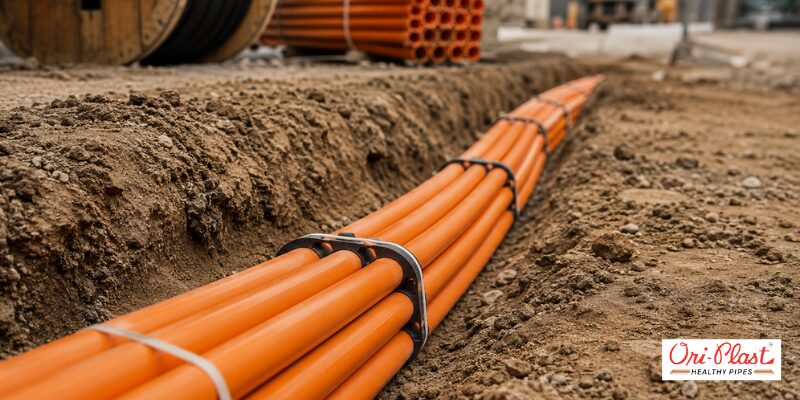 Image Source - AI enerated
 Benefits of TEC-Compliant Telecom Ducts
A high-quality duct offers more than a protected passage. It supports predictable installation and long-term network reliability.
- Smooth cable installation: The lubricated inner layer reduces friction during cable pulling or blowing
- Mechanical protection: HDPE helps shield fiber cables from impact, crushing, and external pressure
- Flexible routing: The duct can accommodate gradual bends and challenging underground pathways
- Long service life: Properly manufactured HDPE ducts resist several common underground stresses
- Better project control: Standardized dimensions make it easier to plan cable capacity, couplers, chambers, and installation tools — much as reliable Electrofusion Fittings make joint planning predictable on a PE pipeline
- Reduced maintenance risk: A strong, correctly installed duct can reduce the likelihood of cable exposure and accidental damage
- Improved quality assurance: Testing and traceable documentation make it easier to evaluate the product before installation
A TEC-compliant product does not remove the need for correct trenching, bedding, jointing, sealing, and installation practices. Compliance and workmanship must work together.
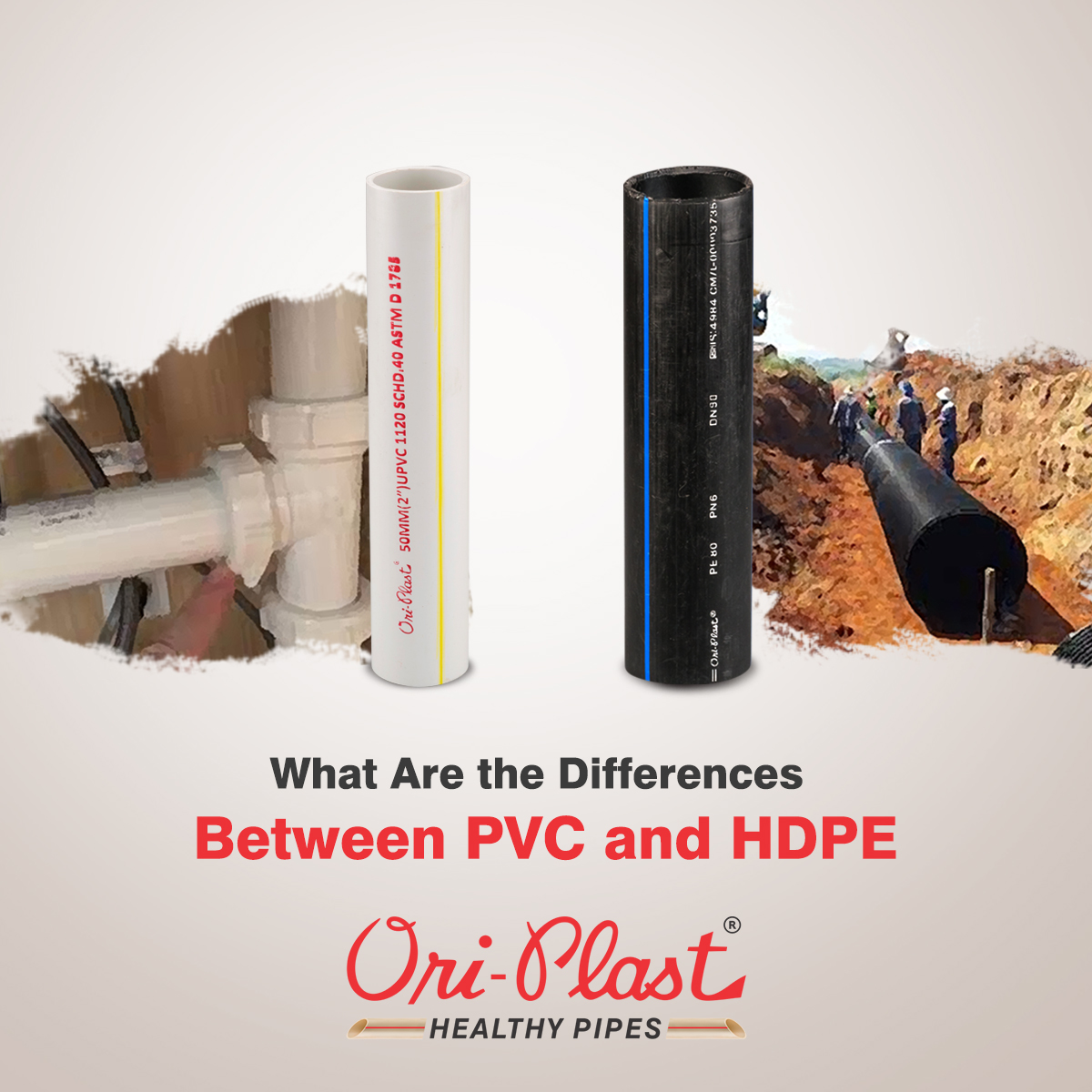
Why Choose HDPE Over PVC for Telecom Cable Ducts?
PVC can be useful in selected conduit applications, but HDPE is often preferred for underground telecom networks because it combines flexibility with impact resistance. Rigid PVC may require more joints and careful handling when the route includes gradual bends or uneven terrain.
HDPE is also widely used for long continuous coils, which can reduce the number of joints along a route. Fewer joints may mean fewer potential points of leakage, separation, or installation error.
The final choice should depend on the project design, cable type, burial depth, traffic loading, local soil conditions, installation method, and applicable specification. Contractors should not select a material only because it is cheaper at the purchase stage.
How to Select the Right HDPE PLB Duct
The correct duct depends on the cable and the route—not simply on what is available from a supplier.
Start by identifying the cable's outside diameter and the method of installation. Confirm the duct's inside diameter, friction performance, bend requirements, and cable-blowing compatibility. Next, evaluate the expected load from roads, vehicles, soil, and nearby construction work.
Ask the best HDPE PLB duct manufacturer in India or supplier for:
- Product datasheet and dimensional details
- Applicable TEC specification reference
- Factory test reports
- Type-evaluation or third-party test documents, where applicable
- Recommended installation procedure — the same care outlined in general pipe installation guidance applies to duct-laying work
- Coupler and end-plug compatibility
- Batch traceability information
- Warranty and after-sales support
A project located in a high-traffic corridor may require stronger protection or an additional outer duct system. TEC documentation also addresses double-walled corrugated polyethylene ducts used as additional underground protection for PLB HDPE ducts.
A Simple Supplier Evaluation Story
Consider a contractor preparing to order ducts for a regional broadband project. Two suppliers offer similar prices. The first provides only a product photograph and promises immediate delivery. The second shares dimensional data, test records, installation instructions, batch information, and a clear escalation contact.
The second supplier may not always be the cheapest, but the documentation makes the purchase easier to defend and the material easier to inspect. A dependable PLB HDPE duct supplier in West Bengal or any other region should understand that project confidence comes from evidence, not from marketing language alone.
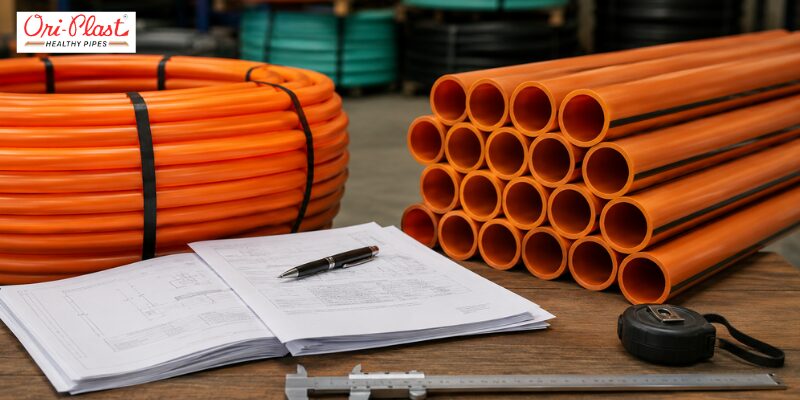 Image Source - AI enerated
 Where to Buy Genuine HDPE PLB Ducts
Contractors planning to buy TEC-compliant HDPE PLB duct should begin with an established manufacturer or authorized supplier. Avoid making a purchase solely through an unverified marketplace listing, especially when the order involves long coils, multiple duct sizes, or critical network routes.
Before you buy HDPE telecom duct in India, confirm the supplier's manufacturing capability, delivery record, testing process, and technical support — the kind of five-decade manufacturing track record and ISO-certified plant network that gives a purchase order real backing. If the project requires bulk material, request a sample or pre-dispatch inspection before placing the complete order.
Organizations looking to buy HDPE PLB duct pipe should also specify the product requirements in the purchase order. Include dimensions, tolerances, coil length, markings, documentation, test requirements, accessories, packaging, and rejection conditions.
When you order HDPE PLB duct for a telecom project, a clear technical purchase order protects both the contractor and the manufacturer. It prevents confusion over whether the supplied product is intended for OFC blowing, direct burial, innerduct use, or additional protection.
Final Checklist Before Purchase
Use this quick checklist before approving the material:
- Confirm the manufacturer's legal and physical identity
- Check permanent product markings
- Match product dimensions with the purchase order
- Request applicable TEC-related documents
- Review factory and type-test reports
- Inspect sample ducts for defects
- Confirm inner-layer lubrication and cable-blowing suitability
- Verify compatible couplers, plugs, and accessories
- Record batch numbers at delivery
- Keep all documents for project handover and future maintenance
Reliable infrastructure begins with reliable evidence. Proper TEC-compliant HDPE PLB duct authenticity verification helps contractors avoid questionable products and select a high-quality HDPE telecom duct that supports smoother installation, better protection, and long-term network performance. For further reading on spotting genuine versus counterfeit piping material, the Oriplast blog covers similar verification practices across the PVC and PE product range, or you can get in touch directly for project-specific guidance.
Frequently Asked Questions
1. What does PLB mean in HDPE telecom duct?
PLB means permanently lubricated. It refers to the low-friction inner layer designed to help optical-fiber cables move through the duct during pulling or blowing.
2. What is TEC compliance?
TEC compliance means that the product has been designed, tested, or evaluated against applicable requirements issued by India's Telecommunication Engineering Centre. The exact requirement should be confirmed for the specific duct and application.
3. Is every HDPE duct suitable for telecom cables?
No. A general HDPE pipe may not have the required internal friction, dimensions, lubrication, cable-blowing performance, or test documentation for a telecom project.
4. How can I verify a TEC-compliant HDPE PLB duct?
Check product markings, technical specifications, manufacturer identity, applicable test reports, type-evaluation documents, and batch information. Compare the documents with the material delivered.
5. What tests are required for TEC-compliant HDPE ducts?
Depending on the applicable requirement, testing may include dimensions, impact, crush resistance, tensile properties, environmental stress cracking, UV resistance, internal friction, and cable-blowing performance.
6. Why is internal friction important?
Lower internal friction helps reduce resistance when an optical-fiber cable is pulled or blown through the duct. This can support longer installation distances and reduce cable stress.
7. How do HDPE PLB ducts prevent fiber cable damage?
They isolate the cable from soil, stones, moisture, external pressure, and accidental contact. Their smooth inner surface also reduces friction during installation.
8. Why is HDPE preferred over PVC for telecom ducting?
HDPE generally offers flexibility, impact resistance, and suitability for long continuous coils. PVC may still be appropriate for specific rigid-conduit applications.
9. Can PLB ducts be used for FTTH networks?
Yes, suitable PLB ducts can be used in FTTH and other fiber networks when their size, installation method, and performance meet the project requirements.
10. Which HDPE PLB duct size should I choose?
Choose the size according to the cable's outside diameter, installation method, bend route, and future capacity requirements. Always follow the project design and manufacturer's recommendations.
11. Are TEC compliance and ISI marking the same?
No. They represent different standards or approval systems. Buyers should verify the specific requirement applicable to the product instead of using the terms interchangeably.
12. How can I identify a counterfeit telecom duct?
Look for unclear markings, inconsistent dimensions, copied documents, missing batch details, unusually low pricing, poor surface quality, and a supplier unwilling to provide traceable records.
13. Should I request a sample before a bulk order?
Yes. A sample inspection can help confirm dimensions, surface quality, markings, inner-layer construction, and documentation before the complete consignment is dispatched.
14. What accessories are needed with PLB HDPE ducts?
Common accessories may include couplers, end plugs, cable-sealing plugs, pulling or blowing equipment, markers, and protective chambers, depending on the installation design.
15. Can PLB ducts be installed under roads?
They can be used in road-crossing and underground projects when the duct design, burial depth, protective arrangement, and installation method are suitable for the expected load.