
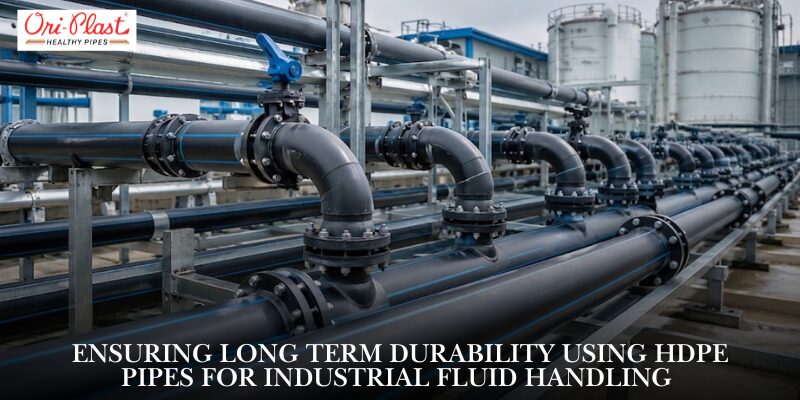
Corrosion, scale buildup, and frequent maintenance are the silent killers of industrial efficiency, but the shift toward HDPE pipes for industrial fluid handling is changing the narrative for modern facilities. Unlike traditional metal systems that succumb to chemical reactions and oxidation, High-Density Polyethylene offers a rugged, high-performance alternative designed to withstand the harshest operating conditions.
Rupa: "Riya, our chemical plant in Kolkata is constantly dealing with pipe failures. We've replaced steel pipes three times in two years because of corrosion. I'm exhausted with the downtime and maintenance costs."
Riya: "I've been there, Rupa. That's exactly why I switched to HDPE pipes for industrial fluid handling last year. Our facility in Guwahati hasn't had a single leak or corrosion issue since."
Rupa: "HDPE? Aren't those just for irrigation? How can plastic handle our aggressive chemicals and high pressures?"
Riya: "That's the biggest misconception! Modern HDPE pipes for industrial fluid handling are engineered specifically for demanding industrial environments. They're actually superior to metal in most ways."
Rupa: "Okay, you convinced me to learn more. But what makes them so special?"
Why Is HDPE Preferred for High-Pressure Industrial Fluid Handling?
Riya: "Three main reasons: pressure tolerance, flexibility, and chemical resistance. Let me break it down."
Superior Pressure Performance
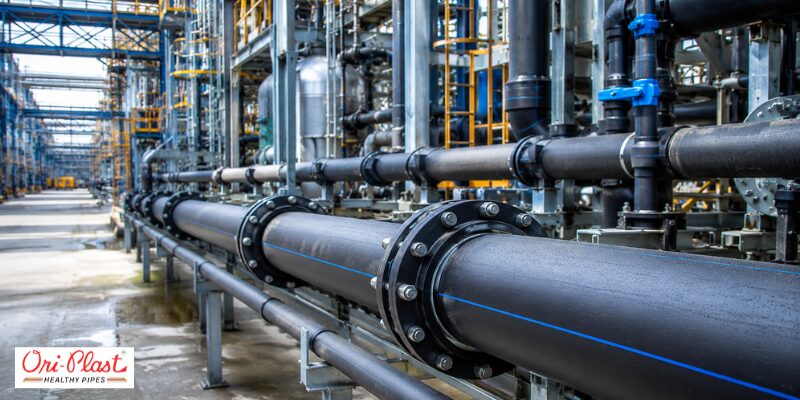
HDPE pipes for industrial fluid handling are manufactured in pressure ratings from PN6 to PN25, with some special grades exceeding 500 PSI for heavy-duty applications. The molecular structure of high-density polyethylene allows these pipes to absorb pressure surges without cracking or bursting.
When you're dealing with industrial fluid systems that experience frequent pressure fluctuations, HDPE's ability to handle stress cycles is unmatched. Metallic pipes tend to develop metal fatigue over time, leading to micro-cracks and eventual failure.
Flexibility That Saves Money and Time
Rupa: "But won't flexible pipes bend too much in our high-pressure system?"
Riya: "Not at all! That's one of the benefits of using flexible PE pipes in industrial environments. HDPE can elongate up to 5% without failure, which means it accommodates ground movement, thermal expansion, and vibrations without breaking."
How Does Pipe Flexibility Impact Installation in Industrial Plants?
Here's where installation cost savings become obvious. HDPE's flexibility reduces the need for elbows, bends, and fittings by up to 40%. The pipes can bend around obstacles with a minimum bending radius of 25 times the nominal diameter.
In tight industrial spaces common in facilities across Jaipur and Raipur, this flexibility means fewer welds, faster installation, and reduced labor costs. You don't need heavy thrust blocks either, saving both material and excavation costs.
The global flexible pipes market is projected to grow at 5.8% CAGR from 2025 to 2035, driven largely by industrial adoption of HDPE solutions for their installation advantages.
Chemical Resistance Properties of HDPE vs Metal Piping Systems
Rupa: "Okay, but what about our sulfuric acid and caustic soda? Will HDPE survive those?"
Riya: "This is where HDPE pipes for industrial fluid handling absolutely shine. The chemical resistance properties of HDPE vs metal piping systems aren't even close."
Complete Corrosion Protection
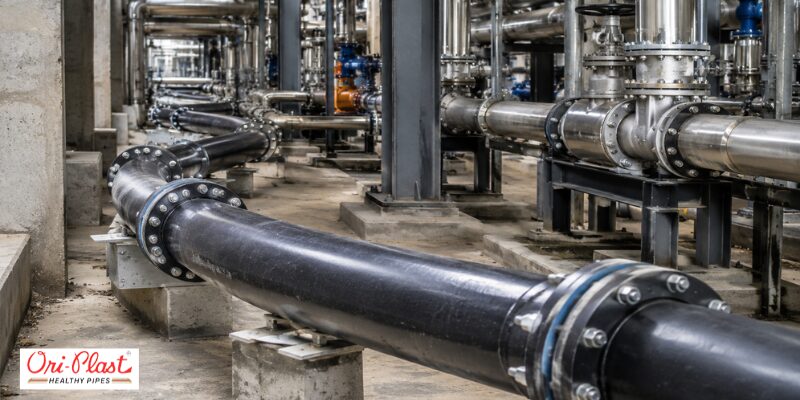
Unlike steel or ductile iron, HDPE is completely immune to electrochemical corrosion. This means no protective coatings needed, no cathodic protection systems required, no rust or scale buildup inside pipes, and no pipe replacement due to corrosion damage.
HDPE pipes for chemical plants resist acids, alkalis, salts, and most organic solvents. The material's non-polar molecular structure prevents chemical penetration and degradation over decades of exposure.
Specific Chemical Resistance Breakdown
When it comes to sulfuric acid up to 70%, HDPE delivers excellent performance while steel corrodes rapidly. For hydrochloric acid, HDPE remains excellent while steel performs very poorly. Caustic soda sees HDPE as excellent and steel as good but eventually corroding. Salt solutions show HDPE as excellent while steel suffers from electrochemical corrosion. Even chlorinated water favors HDPE's excellent resistance over steel's poor oxidation response.
Rupa: "So HDPE won't even need the expensive protective coatings steel requires?"
Riya: "Exactly! That's another cost saving. Premium pipe solutions for industry like Oriplast's HDPE range come ready for chemical service without additional treatments."
Comparing HDPE and Metallic Pipes for Long-Term Durability
Riya: "Let's talk about longevity. When comparing HDPE and metallic pipes for long-term durability, HDPE wins hands down."
Service Life Expectancy
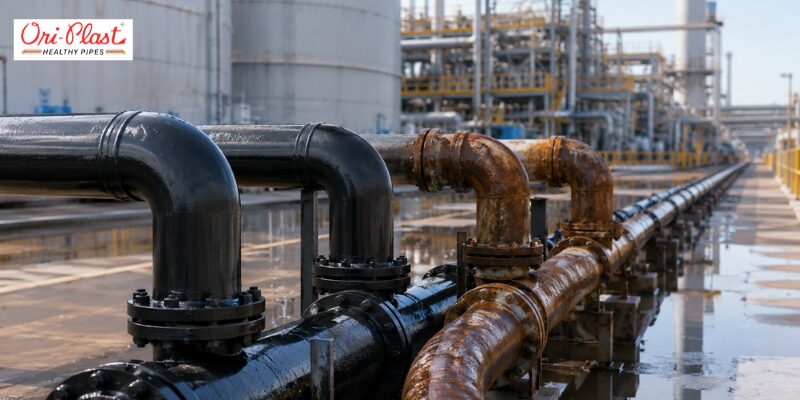
HDPE pipes for industrial fluid handling boast a service life of 50 to 100 years when properly installed. Steel pipes in corrosive environments typically last 10–20 years before requiring replacement.
The difference in total cost of ownership becomes clear when you consider HDPE needs one installation with minimal maintenance and a 50+ year lifespan, while steel requires multiple replacements, continuous maintenance, and averages just 15 years before replacement.
Engineering reports show HDPE replacing steel in industrial piping upgrades because the material maintains structural integrity without degradation from water, chemicals, or soil conditions.
Maintenance Requirements
HDPE requires virtually no maintenance once installed. There's no need for regular painting or coating renewal, leak repairs from corrosion pits, anode replacement for cathodic protection, or scale removal from interior buildup.
Rupa: "That explains why our maintenance budget has dropped so much at the Guwahati facility."
Are HDPE Pipes Suitable for High-Temperature Fluid Applications?
Rupa: "We also handle hot fluids up to 60°C sometimes. Are HDPE pipes suitable for high-temperature fluid applications?"
Riya: "Yes, absolutely! HDPE performs excellently from -40°C to 60°C continuously. For intermittent higher temperatures up to 80°C, specific HDPE grades are available."
For most industrial fluid handling applications in India's climate across Assam, Punjab, and Odisha, HDPE maintains its properties without softening or becoming brittle.
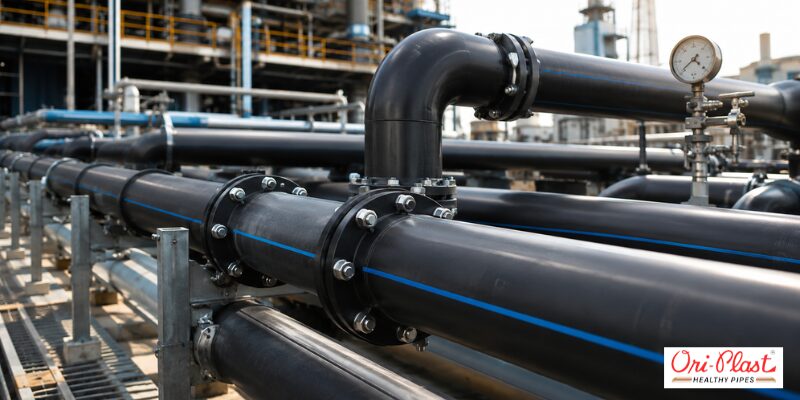
Temperature Performance Comparison
HDPE delivers excellent performance from -40°C to 60°C while steel performs well and PVC performs poorly becoming brittle below 0°C. When temperatures reach 60°C to 80°C, HDPE remains good with specific grades, steel stays excellent, but PVC performs very poorly. Above 80°C, HDPE becomes limited, steel remains excellent, and PVC is simply not suitable for these conditions.
For chemical plants handling heated process fluids, HDPE remains dimensionally stable and maintains pressure ratings throughout its operating range.
Key Technical Standards for Industrial-Grade PE Pipes
Riya: "When sourcing from an HDPE pipe manufacturer in India, you need to verify these standards."
Essential Certification Requirements
Key technical standards for industrial-grade PE pipes include IS 12818 for Indian Standard HDPE pipes for water supply, ISO 4427 for international polyethylene piping systems, ASTM D3035 for PE pipe specifications, and PN ratings from PN6 to PN25 for industrial applications.
Reputable manufacturers test for slow crack growth resistance, rapid crack propagation, and long-term hydrostatic strength. Always request material test certificates showing compliance with these standards.
Why Is PE Piping Considered a Sustainable Industrial Solution?
Rupa: "Our company is also focused on sustainability. Why is PE piping considered a sustainable industrial solution?"
Riya: "Great question! HDPE checks multiple sustainability boxes."
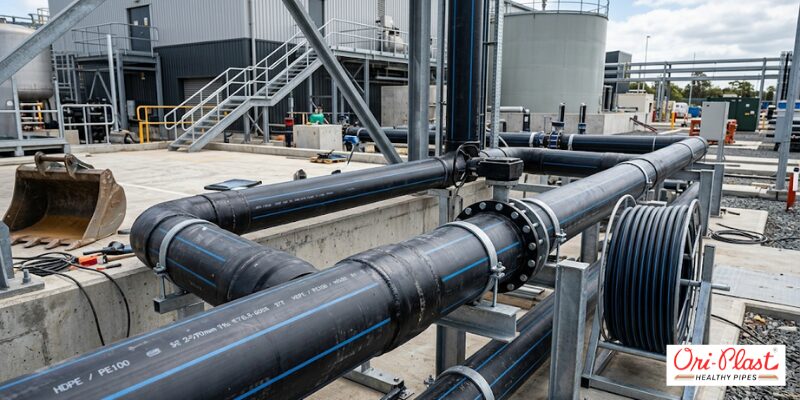
Environmental Benefits
HDPE is 100% recyclable and can be melted and re-solidified multiple times without losing mechanical properties. The manufacturing process requires 65% less energy than steel pipe production.
Other manufacturers are following this sustainable approach with premium pipe solutions for industry that emphasize environmental responsibility throughout the product lifecycle.
Operational Sustainability
Leak-free fused joints eliminate water loss and environmental contamination. The smooth interior surface reduces pumping energy by 20–30%. Longevity means fewer replacements and less material waste. Recyclability at end-of-life closes the material loop.
Choosing the Right Industrial Pipe Supplier
Rupa: "Where should we source reliable HDPE pipes for industrial fluid handling?"
Riya: "You need established industrial fluid handling pipe suppliers with proven track records. Look for manufacturers with multiple production facilities, technical support teams, and presence across key industrial regions."
Companies with manufacturing infrastructure across Jaipur, Kolkata, Guwahati, Raipur, Punjab, Assam, and Odisha can provide faster delivery and local technical support. This accessibility matters when you're managing large industrial projects across multiple locations.
For commercial needs, HDPE pipe manufacturer India specialists offer product ranges specifically designed for chemical plants, water treatment facilities, mining operations, and manufacturing units.
Rupa: "Riya, this conversation has been incredibly helpful! I'm definitely switching to HDPE pipes for industrial fluid handling for our plant expansion."
Riya: "That's great to hear, Rupa! You'll wonder why you waited so long. The flexibility and chemical resistance will transform your maintenance situation."