
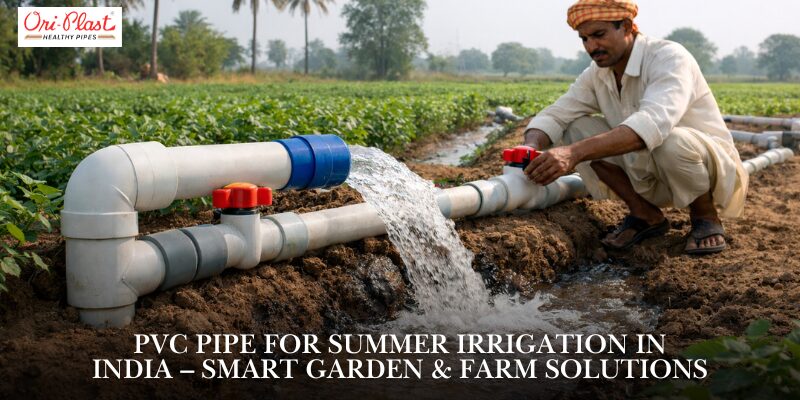
Summer in India is no secret—it’s hot, long, and brutally thirsty. Plants droop, soil cracks, and every drop of water starts to feel like a small fortune. For vegetable gardeners, terrace farmers, and small‑scale irrigation users, the struggle is real: how to keep crops alive without wasting water, money, or energy.
If you’re the kind of grower who’s tired of watering by hand, facing clogged drip lines, or watching your irrigation pipes crack under the sun, this guide is written for you. It focuses on PVC pipe for summer irrigation in India, why it’s still a smart choice, and how you can use it effectively in your garden, farm, or backyard.
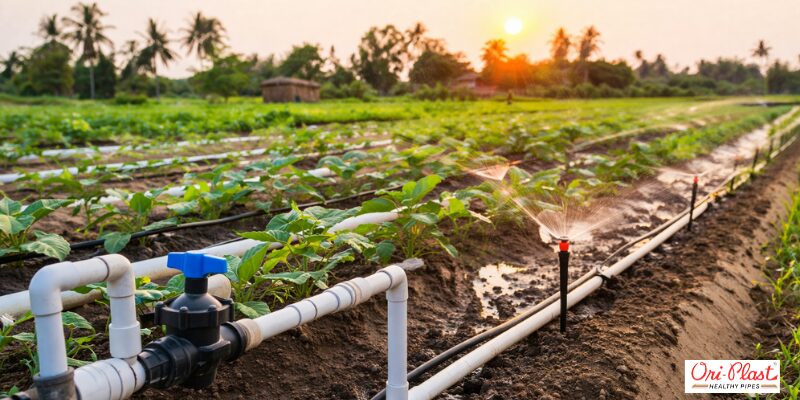 Image Source : AI Generate
 Why summer irrigation is tougher than you think
Summer in India means temperatures that easily cross 40°C in many regions—places like Jaipur, Punjab, and Odisha see intense heat and dry spells that push irrigation systems to their limits. In cities like Kolkata and Guwahati, high humidity can increase evaporation from exposed pipes, while rural stretches of Assam and Raipur often face water scarcity during peak crop cycles.
At the same time, water bills rise and groundwater levels drop. Farmers can’t afford to let water leak, evaporate, or run in long, un‑controlled channels. This is where PVC pipe for summer irrigation in India comes in, not just as a pipe, but as a water‑saving, cost‑efficient backbone for your irrigation system.
How PVC pipe helps you tackle summer efficiently
Using PVC pipe for summer irrigation in India isn’t new, but it remains one of the most practical options for small farms, kitchen gardens, and nurseries. Here’s why:
- It’s lighter and easier to install than metal pipes, so you can set up or modify your system quickly without heavy machinery.
- PVC is smooth inside, which reduces internal friction and helps keep water flowing smoothly even at low pressure.
- It’s highly flexible in layout—you can bend routes around beds, trees, and fields, adjusting laterals as needed.
From a cost perspective, PVC pipe for summer irrigation in India sits in a sweet spot: it’s cheaper than many HDPE alternatives for small‑scale setups, yet durable enough for multiple seasons when chosen and installed correctly.
Best PVC pipe for summer irrigation in India
When everyone talks about the best PVC pipe for summer irrigation, what they really mean is: which pipe can handle heat, pressure, and frequent use without failing in the middle of a crop cycle?
Here’s what to look for:- UV‑resistant and ISI‑rated PVC – makes sure the pipe can handle long hours of direct sun in places like Punjab and Jaipur without cracking or fading.
- Proper pressure rating (Class 5/9/12) – higher class for main lines, medium for sub‑mains, and lower for laterals near plants.
- Thicker walls and smooth bore – helps reduce clogging and maintains flow even with minor sediment.
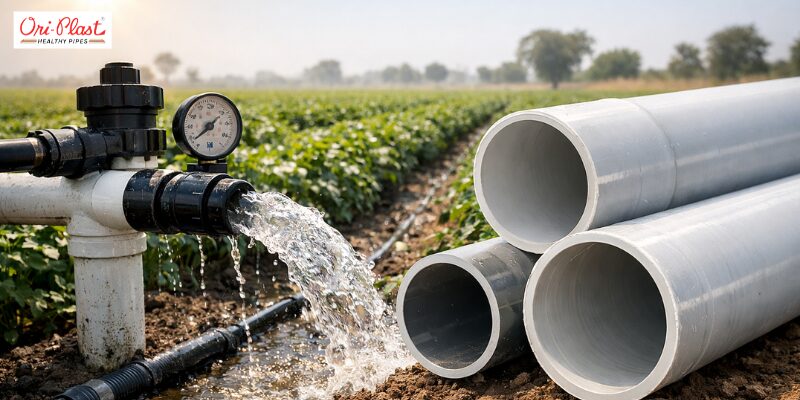 Image Source : AI Generate
 Choosing the best drip irrigation PVC pipe India means not just the lowest price, but the one that balances strength, water‑saving efficiency, and compatibility with your existing fittings and valves.
If you’re thinking, “Which brand is the best garden irrigation pipe India can trust?”, then brands that clearly mention agriculture‑grade PVC, leak‑proof jointing, and UV stabilization are the ones to shortlist.
How to set up summer irrigation with PVC pipes
How to set up summer irrigation with PVC pipes is a question that comes up again and again among home gardeners and small farmers. The good news is, you don’t need to be an expert plumber to make it work.
Here’s a simple, step‑by‑step approach:
- Plan your layout first
- Sketch your garden or field, marking where plants, rows, and water tanks or hand pumps sit.
- Decide if you want drip, micro‑spray, or low‑pressure sprinkler lines.
- Choose the right pipe size for PVC pipe for summer irrigation in India
- Main line: 63mm or 50mm for farms.
- Sub‑main: 32mm or 25mm for vegetables and orchards.
- Laterals: 20mm or 16mm for drip lines near plants.
- Use quality PVC irrigation fittings and valves
- Tees, elbows, and couplings help you route pipes around obstacles.
- Ball valves or gate valves let you control flow to different zones.
- Connect to a water source
- You can run PVC pipe for summer irrigation in India from a water tank, hand pump, or small bore‑well.
- For gravity‑fed systems (common in Assam and Odisha), make sure the tank is at a higher level than the beds.
- Test and adjust
- Open the system slowly, check for leaks, and adjust end‑caps or drip points as needed.
- Move or shorten laterals to cover dry patches or skip over areas you don’t need.
Follow a PVC irrigation system for beginners guide like this, and you’ll quickly convert a chaotic, wasteful setup into an organized, water‑smart network.
Top three summer irrigation tips for vegetable gardens
Vegetable gardens in places like Kolkata, Raipur, and Guwahati often face the double challenge of high humidity and frequent watering needs. A few simple tricks can make a big difference:
- Use mulch first, then watering – A layer of straw or dry leaves helps lock moisture in the soil so your PVC pipe for summer irrigation in India doesn’t need to run as long or as often.
- Water early morning or late evening – This reduces evaporation and keeps plants from stress during the hottest hours.
- Group plants by water need – Keep thirsty leafy greens in one zone, and more drought‑tolerant plants in another to avoid over‑watering anyone.
These small changes, when combined with a proper PVC‑based layout, can reduce water use by 20–30% without hurting yield—an important saving for home gardeners and small farms alike.
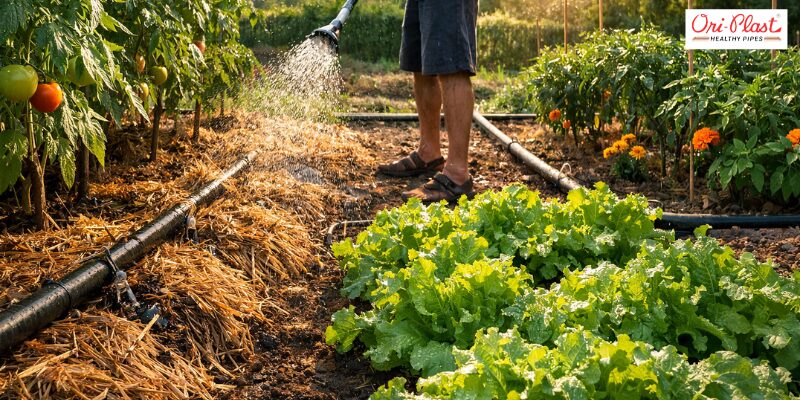 Image Source : AI Generate
 How to make a homemade PVC irrigation system
How to make a homemade PVC irrigation system is a popular search because so many people want to start small and scale up later. The best part is that you can build it with basic hand tools and common PVC pieces.
Here’s how you can do it practically:
- Fix a main PVC line along the edge of your garden or farm.
- Drill small holes or attach micro‑sprayers at regular intervals, depending on plant spacing.
- Cut short pipes and connect them with PVC fittings to create small “T” branches that reach each bed.
- Use end‑caps to close open ends and adjust flow as needed.
This kind of homemade PVC irrigation system is ideal for:
- Kitchen gardens in Kolkata or Guwahati.
- Small vegetable farms in Punjab or Raipur.
- Terrace gardens in Jaipur or similar cities.
The key is to keep it simple, test often, and upgrade as you see what works.
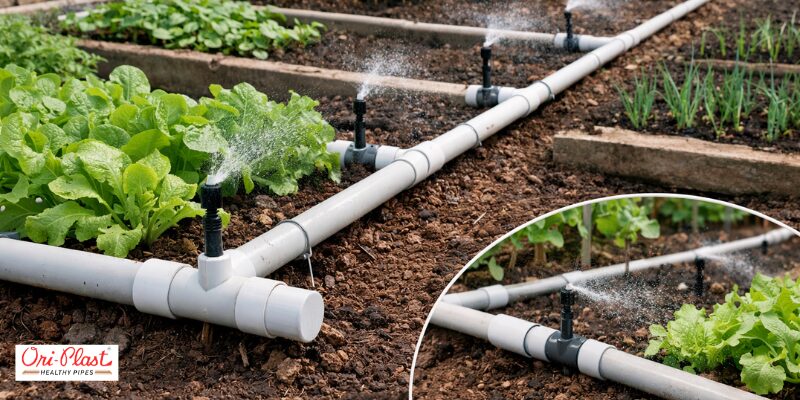 Image Source : AI Generate
 Advantages of PVC pipes for irrigation systems
When you explore advantages of PVC pipes for irrigation systems, several benefits stand out:- Lightweight and easy to install – You can move, extend, or reconfigure your layout without heavy equipment.
- Smooth inner surface – Less friction means less pressure loss and better water distribution.
- corrosion‑resistant – Unlike metal pipes, PVC doesn’t rust in humid places like Kolkata or Assam.
- Good for drip and sprinkler setups – With the right fittings and valves, you can switch between drip and micro‑spray modes easily.
Adding PVC pipe for summer irrigation in India to your setup also makes it easier to scale from a small garden to a full‑scale farm over time, without rebuilding everything from scratch.
Best irrigation method for summer in India
The best irrigation method for summer in India depends on your crop, water availability, and budget. For many gardeners and small farms, the most practical option is:
- Drip irrigation using PVC pipes – delivers water directly to the root zone, cutting evaporation and runoff.
- Micro‑sprinklers – useful for densely planted vegetable beds or nurseries.
- Gravity‑fed PVC systems – common in hilly or semi‑rural areas where water tanks sit above the field.
Among these, drip paired with PVC irrigation pipes is growing in popularity because it can reduce water use by up to 40% compared to traditional flood methods, especially in dry summer months.
How to use PVC irrigation with water tank
How to use PVC irrigation with water tanks is a common question from users who rely on rooftop tanks, farm tanks, or small storage tanks instead of continuous grid supply.
The basic idea is:- Install the water tank at a higher level than your field or garden.
- Run a PVC main line from the bottom of the tank through a valve.
- Connect sub‑mains and laterals to reach each planted area.
- Urban homes in Jaipur and Kolkata using rooftop tanks.
- Rural farms in Odisha and Assam using overhead storage tanks.
By using PVC pipe for summer irrigation in India with a water tank, you can irrigate even when the power or water supply is irregular, because gravity does most of the work.
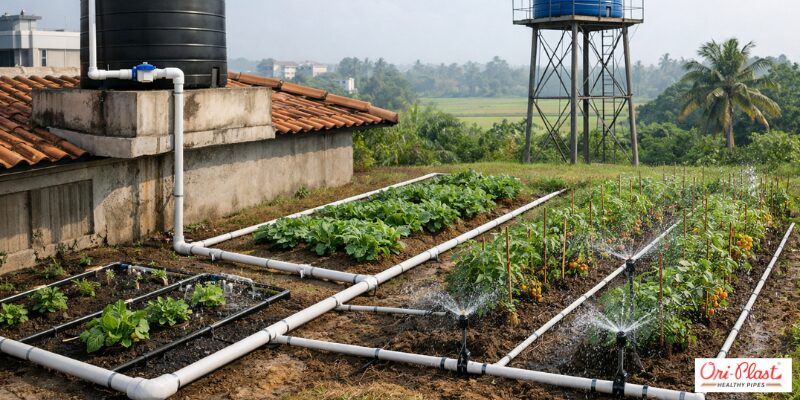 Image Source : AI Generate
 Low‑cost PVC irrigation system India: is it possible?
There’s always a temptation to go ultra‑cheap, but the real question should be: “Can I get a low‑cost PVC irrigation system in India that still lasts?”
The answer is yes—if you:
- Choose reputable PVC pipe brands that are still reasonably priced.
- Use standard fittings instead of too many custom pieces.
- Plan your layout carefully to avoid unnecessary pipe length and extra joints.
Many farmers and gardeners in Punjab, Raipur, and Odisha have successfully run low‑cost PVC irrigation systems in India using reused water, simple PVC laterals, and minimal fittings, all while saving water over the summer.
Where to buy PVC irrigation pipes in India
Once you understand how to set up summer irrigation with PVC pipes and see the value of PVC pipe for summer irrigation in India, the next natural step is procurement.
Here’s how to go about it:
- Buy PVC irrigation pipes India from trusted manufacturers or authorized dealers who clearly mention ISI marking, pressure rating, and UV resistance.
- If you’re in a city like Kolkata, Guwahati, or Jaipur, search for PVC irrigation pipes near me and check dealer reviews, product photos, and warranty terms.
- For farms in Punjab, Raipur, or Assam, consider bulk quotes where you can buy PVC irrigation pipes and fittings together at a better rate.
Pro tip: ask for a sample piece or catalogue before placing a large order, and compare at least two brands that claim to be the best drip irrigation PVC pipe India or best garden irrigation pipe India.
Top PVC brands for garden irrigation in India
When someone asks, “Which are the top PVC pipe brands for garden India?”, the answer depends on your budget, crop type, and climate. That said, look for:
- Brands that clearly state agricultural or irrigation use on their PVC lines.
- Brands that offer different pipe classes and sizes for main, sub‑main, and lateral use.
- Brands that provide fittings and technical support or guides for DIY setups.
Among the options, brands that focus on domestic and irrigation‑grade PVC usually stand out for home gardeners and small farms because they strike a balance between quality and price.
FAQs – PVC Pipe for Summer Irrigation in India
What is PVC pipe for summer irrigation in India used for?
PVC pipe for summer irrigation in India is used to distribute water efficiently from tanks, pumps, or bore‑wells to farms, gardens, and nurseries, reducing evaporation and manual watering.How is PVC different from HDPE for irrigation?
PVC is lighter and more rigid, while HDPE is flexible and more impact‑resistant. PVC works well for fixed layouts and drip systems, whereas HDPE suits long, flexible field lines.Can I use PVC pipes for drip irrigation in summer?
Yes. Drip irrigation using PVC pipes is actually recommended for summer because it delivers water directly to roots, cutting loss to evaporation and runoff.Which PVC pipe size is best for vegetable gardens?
For small gardens, 25mm or 32mm laterals are common. Farms often use 50mm or 63mm for main lines and 25mm for sub‑mains.How do I protect PVC pipes from summer heat?
Choose UV‑resistant, ISI‑rated PVC; avoid exposing long open runs to direct sunlight; or bury or shade them wherever possible.Can I connect PVC irrigation to a hand pump?
Yes. You can connect PVC pipe for summer irrigation in India to a hand pump by using a suitable adapter and pressure‑compatible fittings.How often should I water using PVC irrigation in summer?
It depends on crop and soil, but many vegetable gardens benefit from short, frequent cycles (early morning or evening) instead of long, heavy watering.Is PVC irrigation safe for edible crops?
Yes, if you use food‑grade or irrigation‑grade PVC pipes that are certified and free from toxic contaminants.How do I prevent clogging in PVC irrigation lines?
Filter your water, flush the lines regularly, and use drip emitters or micro‑sprayers designed for your soil type.Can I build a DIY PVC irrigation system myself?
Yes. By following a PVC irrigation system for beginners guide and using simple tools, most home gardeners can set up a basic system without professional help.Does PVC irrigation reduce water bills?
Yes. Efficient PVC‑based drip or micro‑spray systems can cut water use by 20–40% compared with traditional flood irrigation.What is the best irrigation method for summer in India?
For most small farms and gardens, drip irrigation using PVC pipes is the best irrigation method for summer in India because it minimizes evaporation and runoff.How do I use PVC irrigation with a water tank?
Run a PVC main line from the tank outlet through a valve, then branch into sub‑mains and laterals to reach each planted area.Where can I buy PVC irrigation pipes near me?
Search for “PVC irrigation pipes near me” or “authorised PVC pipe dealer” in your city; many dealers in cities like Kolkata, Guwahati, and Jaipur offer online quotation and local delivery.Can I buy PVC irrigation pipes and fittings together?
Yes. Buying PVC irrigation pipes and fittings together from the same brand often saves money and ensures compatibility.What should I look for in the best drip irrigation PVC pipe India?
Look for UV resistance, ISI marking, proper pressure class, smooth bore, and availability of matching fittings and drip emitters.