
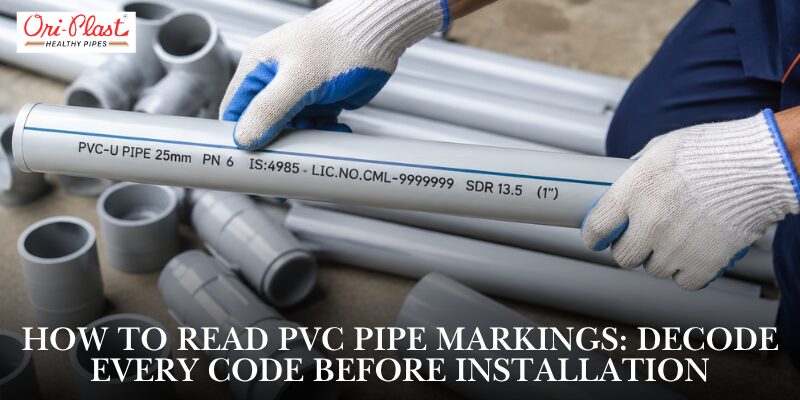
A contractor arrives at a worksite with a bundle of PVC pipes. The pipes look identical, but the project requires a specific pressure class, outside diameter and certification. The printed line on the pipe is faded, partly covered with dust and filled with unfamiliar numbers. Choosing the wrong pipe could lead to leakage, failed pressure testing, costly replacement or unsafe water supply.
That is why knowing how to read PVC pipe markings is more than a technical skill. The label works like the pipe's identity card. It can tell you who made it, what standard it follows, which pressure class it belongs to, when it was produced and whether it is suitable for a particular application — the same due diligence buyers apply when choosing genuine uPVC Pipes & Fittings for a project.
This guide explains how to read PVC pipe markings step by step, including PVC pipe marking guide India requirements, irrigation markings, municipal water specifications, batch numbers and ISI verification.
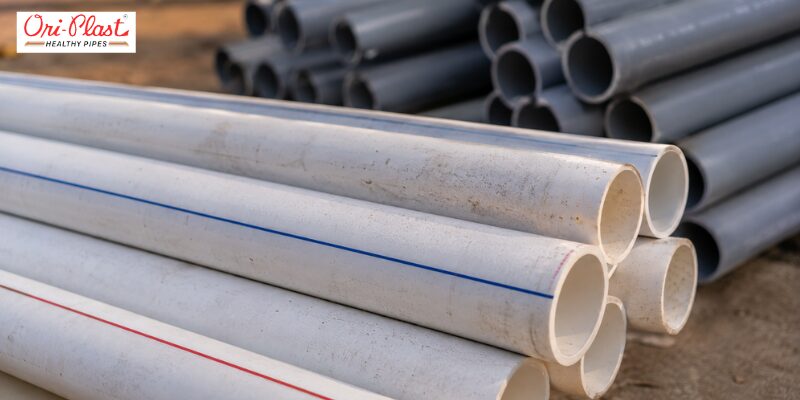 Image Source : AI Generated
 How to Read PVC Pipe Markings Step by Step
PVC pipe printing specifications India may vary according to the product standard, application and manufacturer. However, most pressure pipes carry a combination of the following details:
- Manufacturer's name or trademark
- Pipe material or product type
- Standard number, such as IS 4985 or an applicable ASTM standard
- Outside diameter or nominal size
- Class, PN, Schedule, SDR or pressure rating
- Batch or lot number
- Manufacturing date or production code
- Certification mark or licence number
- Application description, such as "plumbing" or potable water use
Under IS 4985, uPVC pipes for water supplies are required to carry information such as the manufacturer's name, outside diameter, pipe class, pressure rating and batch or lot number. Marking should be clear and indelible, with the information repeated at intervals of not more than 3 metres.
Start with the Manufacturer Marking
Look at the beginning of the printed line for the manufacturer's name, abbreviation or trademark. This is the first part of PVC pipe identification marks and helps you trace the product to its source.
A reliable marking should not look randomly painted or easily removable. Compare the name on the pipe with the invoice, packaging, test certificate and manufacturer's documentation — a manufacturer with a transparent, decades-long track record will have this information readily available. If the pipe has a manufacturer marking but no standard, size or pressure information, ask for clarification before installation.
Check the Product Standard
The standard number indicates the specification used to manufacture and test the pipe. For potable water uPVC pipes in India, IS 4985:2021 is an important reference standard. It covers unplasticized PVC pipes intended for water supply and defines requirements related to dimensions, materials, pressure classes and testing.
Other markets may use standards such as ASTM D1785 or ASTM D2241. Do not assume that an ASTM marking and an IS marking represent the same classification system. The standard should match the project specification and the intended use. Manufacturers with a documented history of awards and recognition in the piping industry are generally easier to verify against these standards.
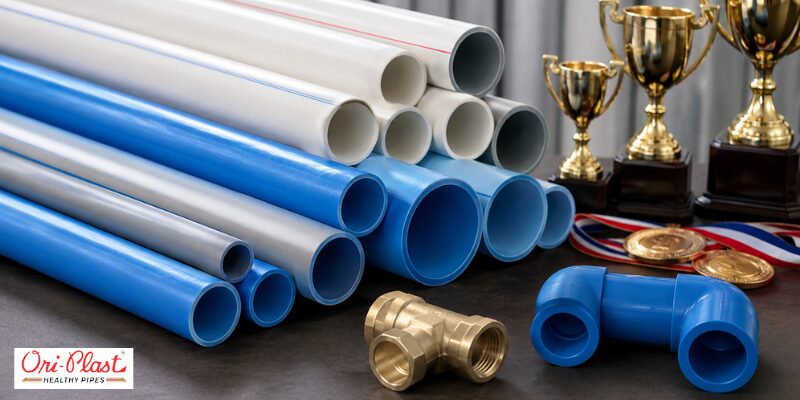 Image Source : AI Generated
 Understanding Size and Nominal Diameter
One of the most common mistakes is confusing nominal size with the actual outside diameter. A marking such as "110 mm" may refer to the nominal outside diameter, while the internal diameter will be smaller because of the wall thickness.
A label may display information in formats such as:
- 63 mm
- 90 mm
- 110 × 4.2 mm
- 110 × 4.2 × PN 6
- 4 inch SCH 40
The first number generally identifies the pipe size or outside diameter. The second number, where shown, may indicate wall thickness. The pressure designation then tells you how the pipe is classified for service.
What Is Nominal Size on PVC Pipe Marking?
Nominal size is a standard reference name used to identify a pipe. It does not always equal the exact internal or outside measurement. For this reason, verify the product's dimensional table before ordering fittings, valves or couplers.
For example, a pipe described as 110 mm may require fittings designed for that specific outside diameter. Measuring only the opening by eye can result in a poor connection.
Identify Class, PN, SDR or Schedule
The next section of the label usually describes the pipe's pressure capability. Depending on the standard, you may see:
- Class: Common in Indian uPVC water-supply specifications
- PN: Nominal pressure, usually expressed in bar or MPa
- SDR: Standard Dimension Ratio, calculated from outside diameter and wall thickness
- Schedule: Common in some ASTM and plumbing systems
- PSI: Pressure rating in pounds per square inch
A pipe with a higher pressure class usually has a thicker wall or a design intended for greater working pressure. Still, pressure rating also depends on temperature, fluid, installation quality and the applicable standard.
The IS 4985 system classifies pipes according to working pressure at 27°C. The classes commonly range from Class 1 at 0.25 MPa to Class 6 at 1.25 MPa. Always confirm the exact rating from the product certificate rather than relying only on colour or memory.
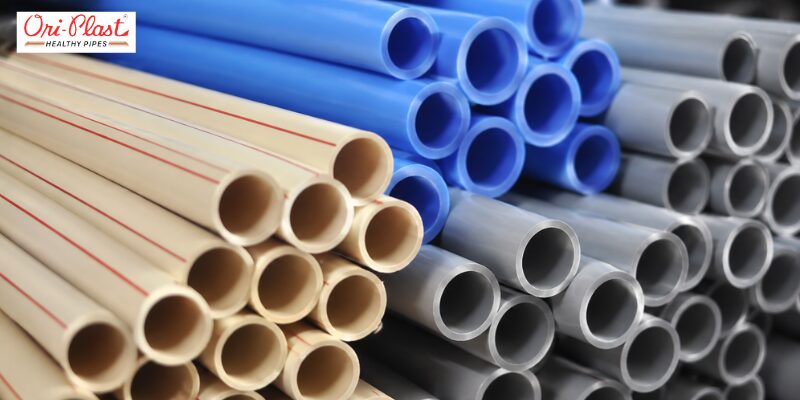 Image Source : AI Generated
 How to Read PVC Pipe Markings for Pressure Rating
A pressure marking may appear as "PN 6," "Class 4," "6 kg/cm²" or "100 PSI." These designations should not be compared directly without checking the standard and reference temperature.
How to Find Pressure Rating on PVC Pipe Label
Follow these steps:
- Locate terms such as Class, PN, PR, SDR, SCH or PSI
- Identify the number printed immediately beside the term
- Check whether the rating is stated in MPa, bar, kg/cm² or PSI
- Confirm the applicable temperature and standard
- Compare the rating with the project's maximum operating pressure
- Review the manufacturer's technical data before final selection
A "Class 6" pipe and a "PN 6" pipe should not automatically be treated as identical. They may belong to different classification systems. The product datasheet is the safest way to interpret the marking.
PVC Pipe Markings for Irrigation
Irrigation networks often include long pipelines, pumps, pressure fluctuations, buried sections and uneven terrain. These conditions make the printed rating particularly important.
For PVC pipe markings for irrigation, check:
- Outside diameter
- Pressure class or PN rating
- Standard specification
- Batch number
- UV or installation recommendations
- Compatibility with irrigation fittings
- Whether the pipe is designed for pressure or non-pressure drainage
A gravity drainage pipe should not be substituted for a pressure-rated irrigation pipe simply because both are made from PVC. Pipes used near pumps or on rising ground may experience higher operating pressure than expected. Buyers sourcing Agricultural Pipes & Fittings for such conditions should always cross-check the printed class against the site's actual pump pressure.
Some irrigation products use blue or other application-specific stripes, but colour alone should never determine suitability. Read the full marking and match it with the irrigation design.
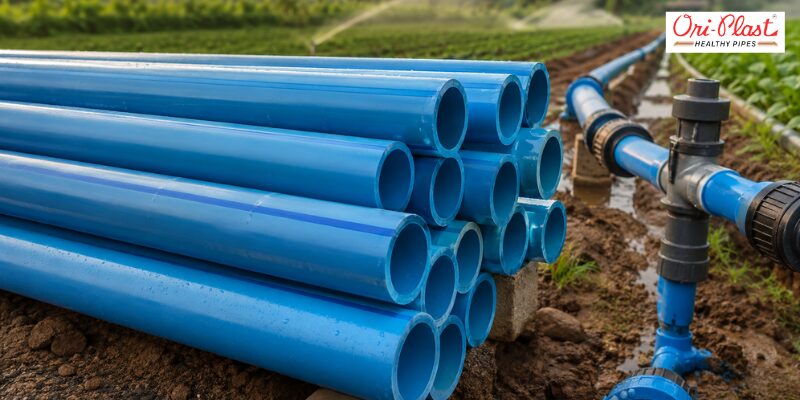 Image Source : AI Generated
 PVC Pipe Marking for Borewell Line
Borewell lines can face pump pressure, water hammer and difficult maintenance conditions. A pipe selected only by diameter may fail even when it fits the borewell assembly.
For PVC pipe marking for borewell line applications, check the pressure class, wall thickness, connection type and manufacturer's recommended installation depth. Confirm whether the pipe is designed for rising mains, casing, column pipe or another borewell function — this distinction is exactly why Borewell & Column Pipes are manufactured and marked as a separate product category rather than general-purpose PVC pipe.
The words "borewell" or "agriculture" on packaging do not automatically prove that the pipe is appropriate for every borewell system. Ask for the pressure rating and technical specification in writing.
PVC Pipe Marking for Municipal Water Projects
Municipal water projects usually demand traceability, documented testing and compliance with the tender specification. The label should be read together with the inspection report, test certificate and delivery documents.
For PVC pipe marking for municipal projects, verify:
- Applicable IS or project standard
- Manufacturer's name and licence details
- Nominal size or outside diameter
- Pressure class
- Batch or lot number
- Production date
- Certification mark
- Test certificate matching the supplied batch
A municipal buyer should also check that the marking is repeated along the pipe length and remains legible after handling. This same rigour underlies Oriplast's water supply solutions range, where traceable marking is treated as part of the deliverable, not an afterthought. International marking guidance similarly identifies manufacturer, size, pressure class, standard, production code and certification information as common pipe-marking details.
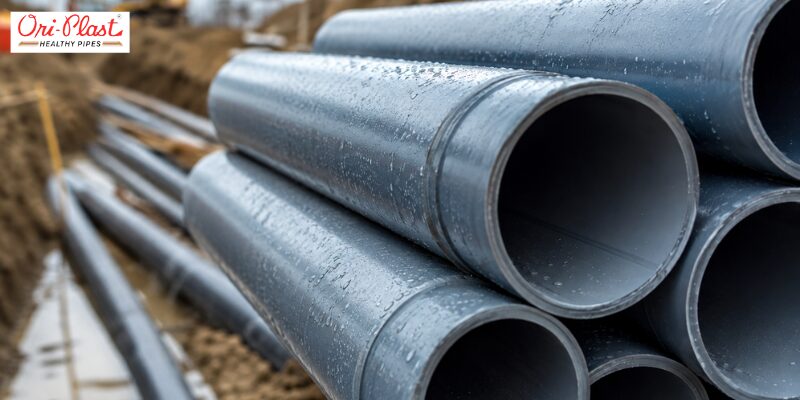 Image Source : AI Generated
 Batch Number and Manufacturing Date
What Is Batch Number on PVC Pipe?
A batch number is a production reference assigned to a particular group of pipes made under defined manufacturing conditions. It helps the manufacturer trace raw materials, production records, inspection results and quality tests.
The batch number may contain letters, numbers or a combination of both. There is no single universal coding format. It may appear beside terms such as "Batch," "Lot," "LOT No." or "Production Code."
How to Read Month and Year of Manufacture
Some manufacturers print the month and year directly, such as "06/26" or "JUN 2026." Others use a coded production number. Never assume that the first two digits always represent the month.
Ask the manufacturer to confirm the code if the date is unclear. Match the production date and batch number with the delivery challan, test certificate and invoice. This is especially important when buying large quantities for public infrastructure or commercial construction.
How to Verify the ISI Mark
The ISI mark should be accompanied by the relevant Indian Standard number and a valid BIS licence reference. Do not rely on a logo alone because an isolated symbol can be copied or printed incorrectly. For a full walkthrough of this process, see the related guide on how to verify the ISI mark on PVC pipes and spot counterfeit material before it reaches the worksite.
How to Verify ISI Mark on PVC Pipe
Check the following:
- Look for the ISI/BIS mark and applicable standard number
- Note the manufacturer's name and licence number
- Match the information with the product packaging and invoice
- Check whether the pipe specification matches the project requirement
- Confirm the licence through official BIS resources where possible
- Ask for a current test certificate for the supplied batch
Buy PVC pipe with ISI marking only after confirming that the marking belongs to the actual manufacturer and product category. A compliant PVC pipe manufacturer marking should be clear, permanent and consistent across the pipe, packaging and documentation.
Font, Position and Print Quality
There is no universal font style that every PVC manufacturer must use. The important requirements are that the marking is legible, durable, contrasting and placed so it can be read during inspection.
For IS 4985 products, the marking may be applied using ink, paint or hot embossing. The 2021 specification also permits inkjet printing in a contrasting colour, with a circumferential colour band used near the end to identify the class in relevant cases. Proper storage and handling practices also help keep these markings legible right up to installation, rather than letting dust and abrasion wear the print away.
Class colour codes may also be used. Under the referenced IS 4985 marking system, Class 1 is red, Class 2 blue, Class 3 green, Class 4 brown, Class 5 yellow and Class 6 black; plumbing pipes are identified in pink. Treat the colour as a helpful identification aid, not a substitute for the printed specification.
A Quick Label-Reading Example
Suppose a pipe reads:
ABC Pipes | IS 4985:2021 | 110 × 4.2 mm | Class 4 | Batch 0626A | ISI Licence
Here is the simple interpretation:
- ABC Pipes: manufacturer or trademark
- IS 4985:2021: applicable Indian Standard
- 110 mm: outside diameter or nominal dimensional reference
- 4.2 mm: wall thickness, subject to confirmation from the datasheet
- Class 4: pressure classification
- Batch 0626A: production traceability code
- ISI licence: certification information requiring verification
A buyer in Guwahati, for example, can use this same checklist before accepting a delivery for a water-supply or irrigation project. Across India, printed markings reduce confusion between visually similar products and make quality checks more systematic.
Final Buying Checklist
Before you buy PVC pipe with printed pressure rating, confirm:
- The standard matches the intended application
- The diameter matches the fittings and design
- The pressure rating exceeds the expected working pressure
- The batch number is visible
- The manufacturing date is available or traceable
- The ISI/BIS information is verifiable where required
- The marking matches the invoice and test certificate
- The pipe is intended for potable water, irrigation, borewell or municipal use as specified
A printed label cannot replace proper engineering design, but it can prevent many avoidable purchasing and installation errors. For more buying guides like this one, browse the Oriplast blog, or get in touch for help matching a marking to your project's technical requirement.
Frequently Asked Questions
1. How do I read PVC pipe markings?
Read the label from left to right. Identify the manufacturer, standard, size, class or pressure rating, batch number, date code and certification mark.
2. What is the most important PVC pipe marking?
The most important details are usually the pipe size, pressure class, applicable standard and manufacturer identity. The correct priority depends on the project.
3. How can I find the pressure rating on a PVC pipe label?
Look for Class, PN, PR, SDR, Schedule or PSI. Check the manufacturer's datasheet if the number or unit is unclear.
4. Is Class 6 better than Class 4?
Class 6 generally indicates a higher working-pressure classification than Class 4 under the same standard. Select the class required by the system, not simply the highest available class.
5. What does PN mean on a PVC pipe?
PN usually means nominal pressure. The exact meaning and test conditions depend on the product standard and manufacturer.
6. What is a batch number on a PVC pipe?
It is a production traceability code that connects the pipe to a manufacturing lot, inspection record and quality documentation.
7. Does a batch number always show the manufacturing date?
No. Some batch numbers include a date code, while others require confirmation from the manufacturer.
8. How do I read the month and year of manufacture?
Look for a printed date such as month/year or a production code. Contact the manufacturer when the code is not self-explanatory.
9. What is nominal size on PVC pipe marking?
Nominal size is a standard identification reference. It may not equal the exact internal diameter or outside diameter.
10. Can colour identify the PVC pipe class?
Colour can provide a quick indication where the applicable standard assigns class colours. Always confirm the printed class and pressure rating.
11. How do I identify potable water PVC pipe?
Look for the applicable potable-water standard, manufacturer information, certification details and any required application marking. Do not rely on colour alone.
12. What does IS 4985 mean on a uPVC pipe?
IS 4985 is an Indian Standard associated with unplasticized PVC pipes for water supplies. Check the current standard version and certification details.
13. Is every PVC pipe with an ISI logo certified?
Not necessarily. Verify the standard number, licence information and manufacturer details through reliable BIS documentation.
14. What are PVC pipe printing specifications in India?
Markings should generally be clear, durable and traceable, showing information such as manufacturer, diameter, class, pressure rating and batch or lot number.
15. Are PVC pipe markings for irrigation different from plumbing markings?
They can be different because irrigation and plumbing products may follow different standards and pressure requirements. Check the application and technical datasheet.